
Introduction
Primary care facilities in South Africa and across the continent need to prepare themselves for the effects of climate change and the broader ecological crisis.1 This broader ecological crisis also includes changes in land use, loss of biodiversity, pollution, ocean acidification, and modification of biogeochemical flows. These earth system changes lead to health and social effects on populations via several proximate causes, such as changes in air quality, freshwater quality or quantity, food production, exposure to infectious diseases, and extreme weather events.
The impact of these changes will also depend on modifying factors such as the wealth of the country, state of infrastructure, population structure and socioeconomic issues, as well as the leadership and governance.2
Africa is particularly vulnerable to the impact of climate change. The Intergovernmental Panel on Climate Change projects increasing risks to human health and wellbeing due to climate change. These risks include increasing morbidity and mortality, greater displacement and migration, reduced agricultural productivity and food security, and heightened exposure of people, livelihoods, and infrastructure to climate-related hazards.3
Climate change affects the full spectrum of the burden of disease.2,4 Changes to food production and social effects such as loss of livelihoods and displacement of communities lead to increases in malnutrition, particularly for children under 5 years. Changes to the distribution of vectors such as mosquitoes leads to changes in the pattern and prevalence of diseases such as malaria and dengue, causing an overall increase. Changes to water quality and quantity, combined with poor sanitation during flooding, lead to increases in gastroenteritis, including outbreaks of cholera. Extreme heat challenges the cardiovascular system and leads to an increase in myocardial infarction, especially in older adults and people with diabetes.5 Extreme heat may also adversely affect pregnant women increasing risks of preterm birth, stillbirth, congenital anomalies, gestational diabetes and hypertensive disorders.5 Asthma may be exacerbated by increases in known allergens as well as new allergens as vegetation changes. Extreme weather events such as cyclones with high winds and flooding, or high temperatures with wildfires lead to injuries and trauma, including death. Drought, particularly during El Niño events, impacts food production, water quality and quantity. The psychosocial impact of displacement, conflict, loss of livelihoods, and food insecurity may cause mental health problems or exacerbate existing psychiatric conditions.
At the same time as health services are expected to respond to peak demand, emergencies or disasters,6 the same extreme weather events can also impact the health system with damage or destruction to infrastructure, disruption to routine health services, problems with staffing, and disruptions to supply chains, communications, energy, and water and waste systems. During such times, “strong relationships, good communication and shared values” among health service providers are essential.7
Primary care is the most accessible entry point to the health system and needs to adapt and respond to changing patterns of morbidity. However, primary care facilities and services are also subject to the same climate hazards and proximate causes as the communities they serve and may not be resilient enough to continue functioning. Recently, flooding and damage and destruction of facilities from cyclones and severe storms in KwaZulu-Natal and Eastern Cape caused loss of services to local communities.8 Facilities need to be prepared to respond to crises, such as acute injuries and displaced populations, as well as be able to continue offering essential services such as chronic disease management and maternal and child health care.
The World Health Organization (WHO) defines climate resilient health systems as those “that are capable to anticipate, respond to, cope with, recover from and adapt to climate-related shocks and stress, so as to bring ongoing and sustained health care to their target populations, despite an unstable climate”.9 Climate resilience implies the ability to learn how to prepare for climate shocks or stressors, to respond appropriately, and then to recover, ideally to the same level of performance or even better. Health systems need to learn from their performance during the response and recovery phases so that they can be more resilient in the future. In a worst-case scenario, facilities with a lack of preparation and low initial capacity may collapse or perform at a much lower level.
The WHO argues that at the level of health facilities, two environmental issues, namely, climate resilience and environmental sustainability are interconnected and should be considered together.9
African nations differ widely in their development pathways, energy systems, emissions profiles, and approaches to environmental sustainability. While the continent’s historical and per capita greenhouse gas emissions remain relatively small compared with those of high-income countries, future trajectories tell a different story.10 Rapid urbanisation, population growth, and economic development (particularly in Africa’s emerging economies and expanding megacities) will play an increasingly important role in shaping global emissions and, consequently, the pace and magnitude of global warming. Supporting low-carbon, climate-resilient development in these contexts is therefore central to achieving equitable and sustainable global climate goals.
South Africa accounts for half of African greenhouse gas emissions and its per capita carbon footprint is already higher than some high-income countries.11 There is also evidence that health care in low- and middle-income countries (LMIC) is more carbon-intensive per unit of expenditure than in high-income countries.12 So, while climate resilience remains the key focus, environmental sustainability is also important. As the South African health system is developed, it is important also to follow a low-carbon trajectory.
Many countries have developed national adaptation plans to improve overall resilience and some have paid attention to health systems.13 The South African National Department of Health has established a climate change committee to consider these issues. National plans, however, may lack the granularity needed to prepare for the specific contextual issues at the level of a sub-district or individual facility. Tools are needed to help managers and healthcare workers at a local level develop action plans that are aligned with national policy and enable access to available resources.
This article describes an approach for assessing climate resilience and environmental sustainability of primary care facilities as an example of good practice that can lead to an action plan and better preparedness for extreme weather events.
Case description
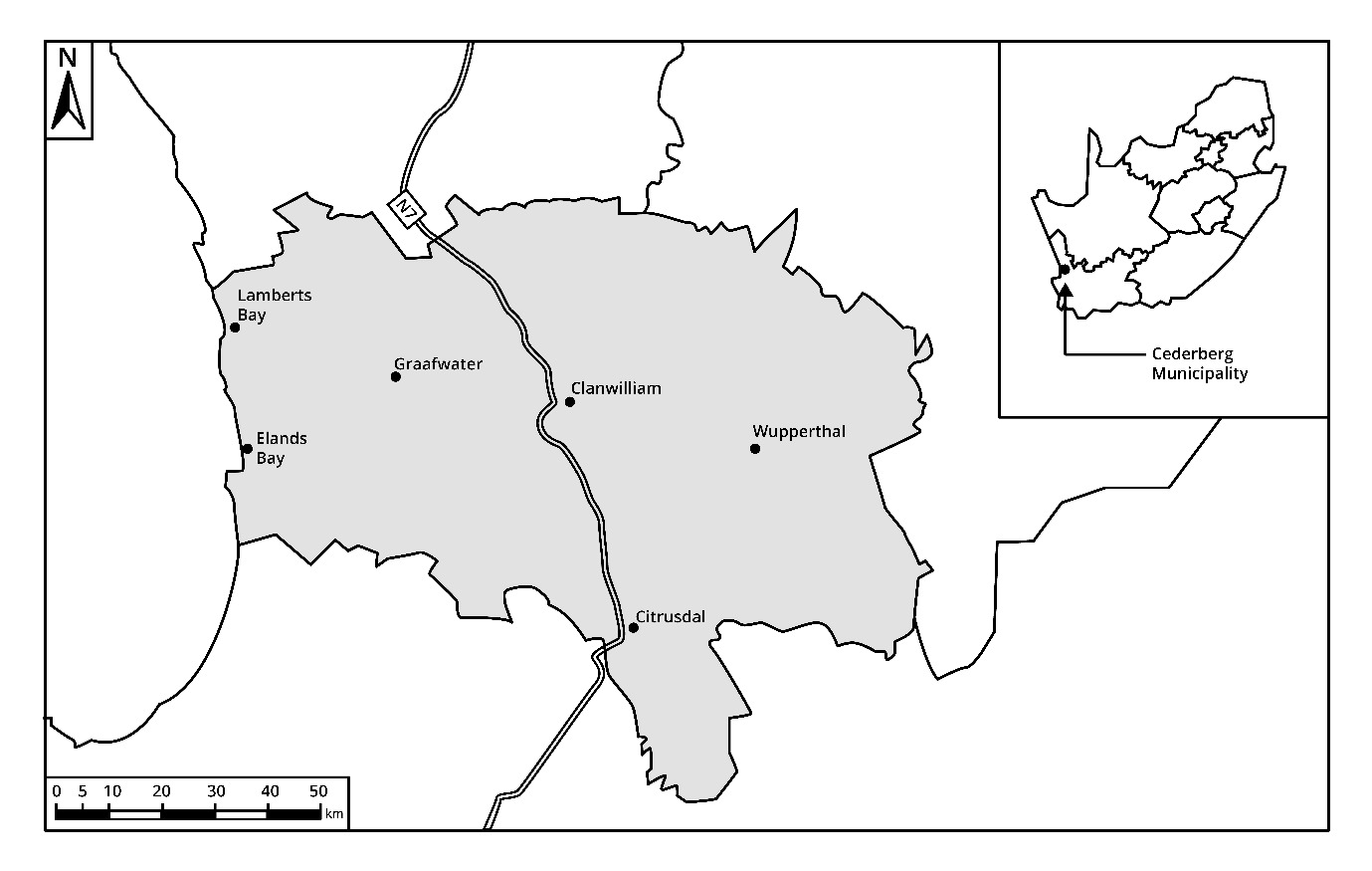
According to the Department of Environmental Affairs and Development Planning of the Western Cape, the Cederberg sub-district is one of the most vulnerable to the effects of climate change.14 This assessment was based on climate hazards and socio-economic and governance factors. For this reason, the Cederberg sub-district was chosen for this study. Cederberg is situated in the West Coast District and is bound in the west by the Atlantic Ocean and in the east by the Cederberg mountains. It is a predominantly rural and farming area with five small towns and one village that each contain a primary care facility (Figure 1).
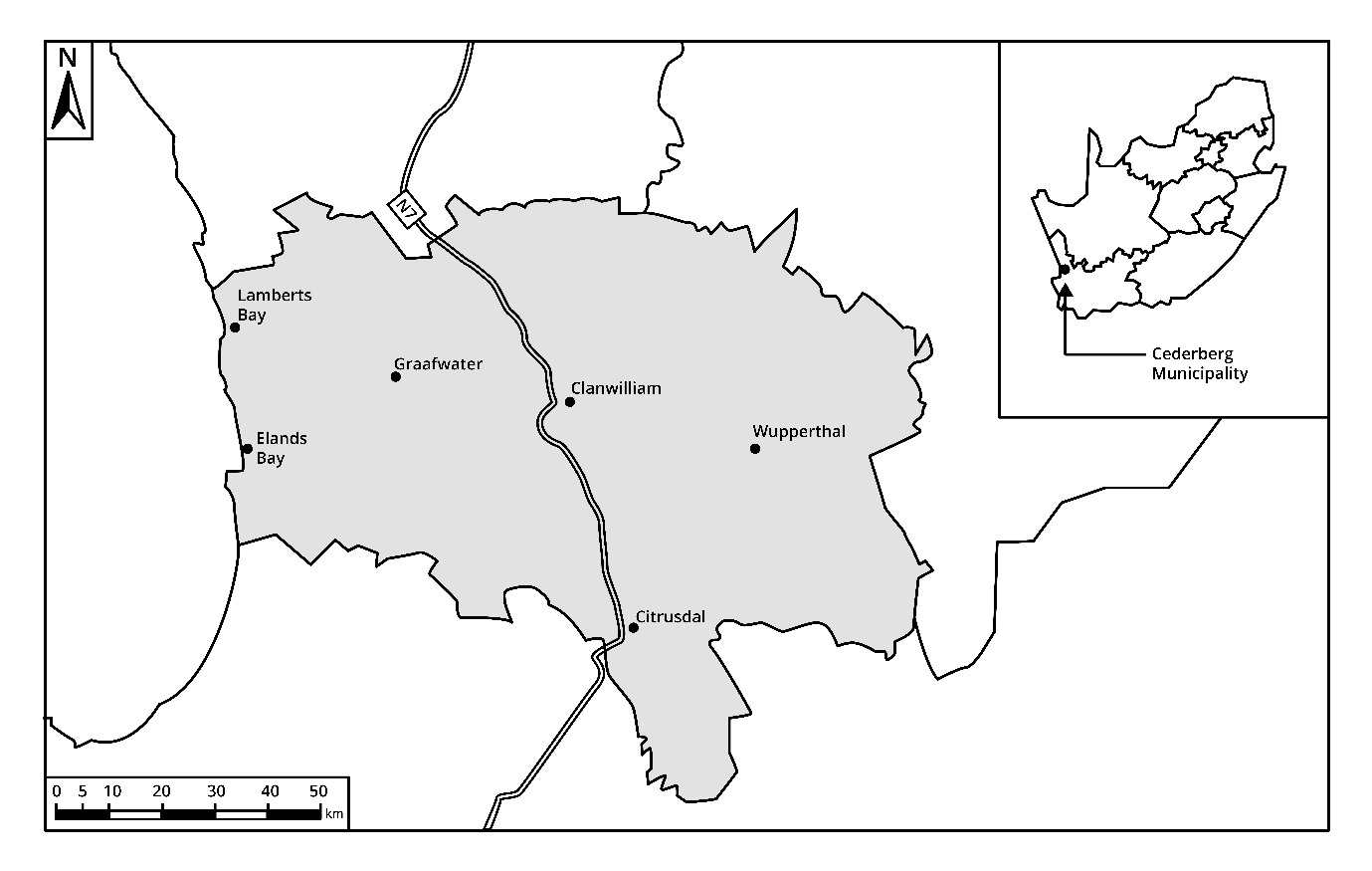
The population is estimated at 65 000, 35% of whom live in the two main towns of Citrusdal and Clanwilliam. Seasonal foreign migrants who assist on the farms have become more perennial with an expansion of informal settlements, often in flood prone areas.
One of the main climate hazards of the area is extreme heat, and temperatures are predicted to rise significantly over the next 30 years with a corresponding reduction in mean precipitation. Heat waves come with a risk of wildfires, and the village of Wupperthal was partly destroyed by a fire in 2019. Temperatures inside informal dwellings can rise dramatically, and residents may seek shelter at the local health facility during heatwaves. In addition, there is a pattern of winter storms with severe flooding; Citrusdal was cut off in 2023 and 2024 as the main road was washed away.
The burden of disease is characterised by HIV and tuberculosis, injuries from interpersonal violence and road traffic accidents, and non-communicable diseases such as chronic obstructive pulmonary disease, stroke, and ischaemic heart disease (personal communication sub-district Manager). In addition to the six primary care facilities that are open daily during office hours, there is one part-time clinic, five mobile clinics, six ambulances, and two district hospitals. The annual primary care headcount is 243 107.
Approach
The need to develop an approach to evaluate and improve the climate resilience of the health system was initially suggested by the Climate Change Working Group of the Department of Health and Wellness, Western Cape Government, in 2023. The research project was then conceptualised by researchers at Stellenbosch University in the Division of Family Medicine and Primary Care who also employed a lecturer in planetary health with strategic funding. The core team reached out to university colleagues in public health and emergency medicine, and through the global Climate Change, Migration and Health network,15 identified a potential tool from the Climate Action Accelerator (CAA).16
We initially approached the West Coast district management team and health council to discuss the project in 2024. The sub-district management team in the Cederberg indicated their interest in participating and requested that we perform a carbon footprint of the sub-district, in addition to the assessment of climate vulnerabilities and capacities.
The CAA16 is a not-for-profit initiative that mobilises common good organisations to scale-up climate solutions and accelerate the transition to low-carbon, resilient, and sustainable models. Among its activities, the CAA developed a climate vulnerability and capacity assessment (VCA) approach for health facilities, first piloted in a hospital in Chad. As the CAA sought to extend this work to primary health care settings, we collaborated to adapt and pilot the approach in the Cederberg sub-district.
Assessing climate resilience and environmental sustainability
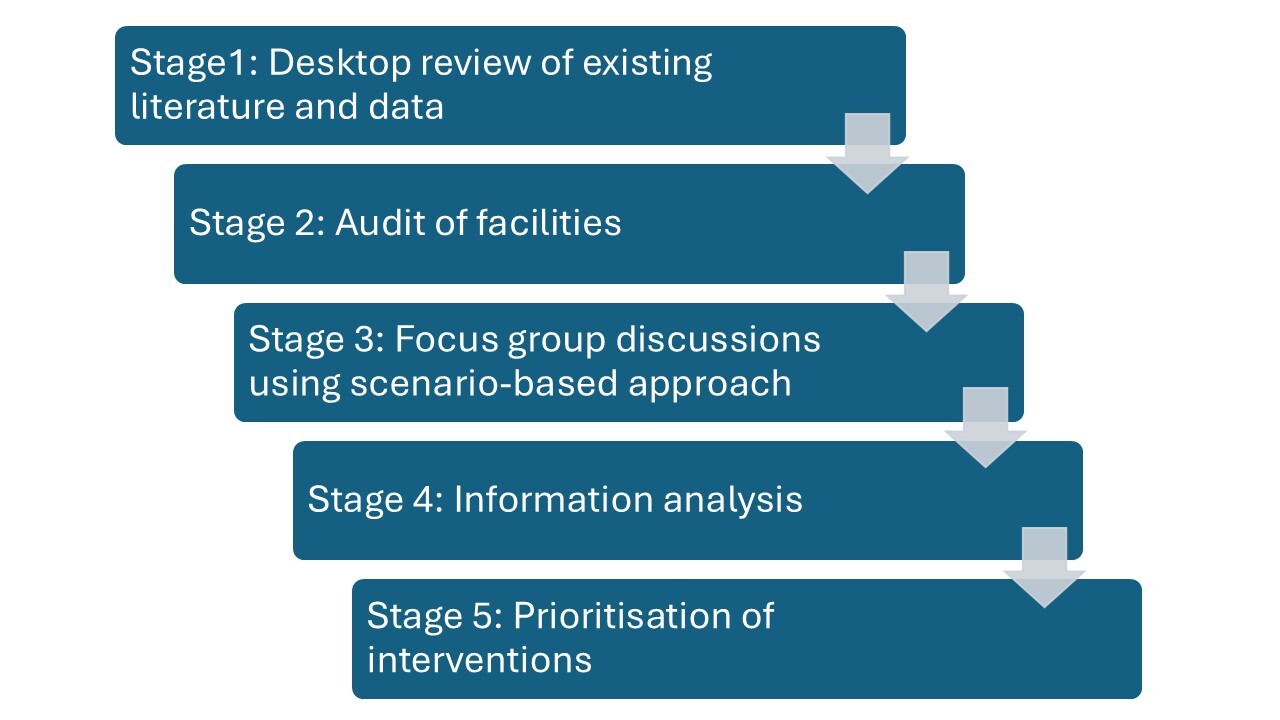
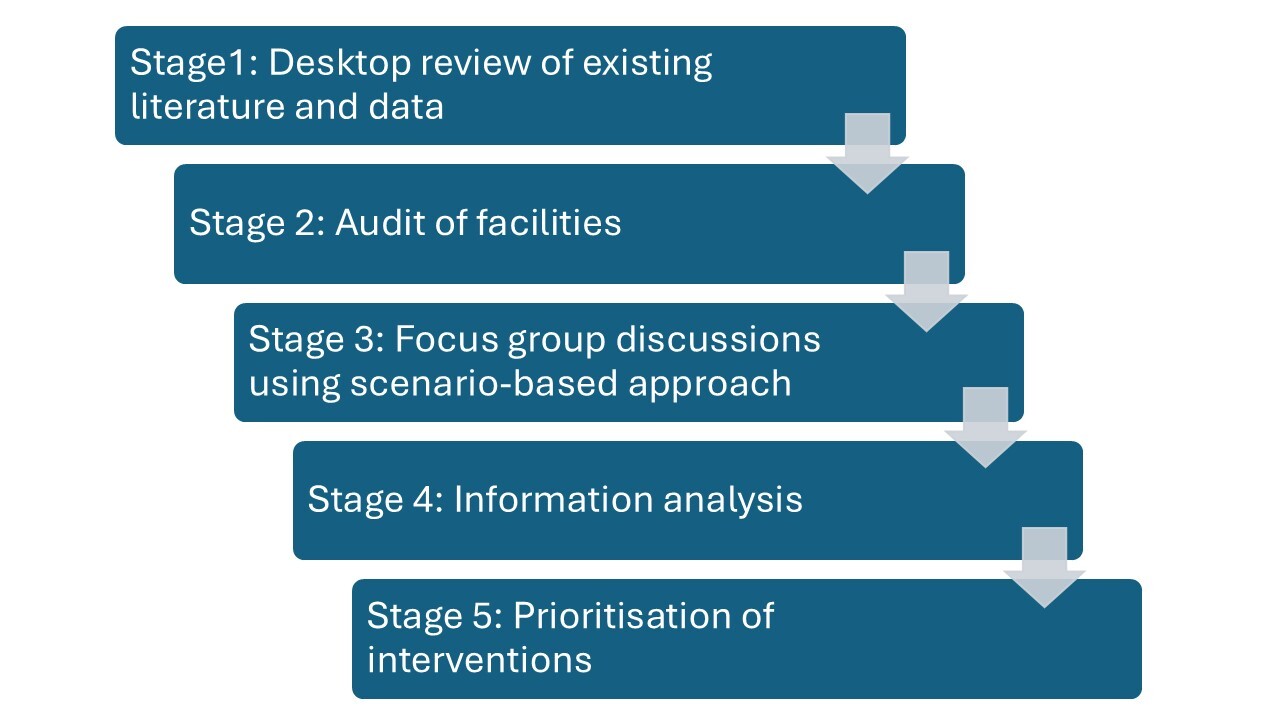
The VCA approach17 has five steps (Figure 2) that are described below. The project team consisted of four researchers from Stellenbosch University, three consultants from the CAA, and the sub-district manager from the Department of Health and Wellness. The team from Stellenbosch University included a planetary health researcher, a family physician, an emergency medicine consultant, and a public health specialist who was also a psychologist.
Step 1: Desktop review
A rapid desktop review was conducted to compile available information on climate hazards, demographics, disease burden, and health services in the Cederberg sub-district. Data were drawn from government and municipal reports, the district health information system, and input from the sub-district management team. The review provided an initial overview of local vulnerabilities, capacities, and climate risks, and helped identify key information gaps for subsequent stages of the assessment. The review was conducted by one person over four weeks.
Step 2: Facility audit
The CAA provided an audit tool, previously used in Chad, which required substantial adaptation for use in primary care and the Cederberg context. Guided by WHO frameworks, the team reviewed and streamlined items across four key domains (workforce; sanitation, water and waste; energy; and infrastructure) drawing from the WHO’s comprehensive 295-item guidance to ensure relevance and feasibility.9 Additional questions were included on service delivery and emergency preparedness, resulting in a validated 74-item tool combining closed and categorical questions with space for qualitative notes. Four team members visited six primary care facilities, working with the nurse-in-charge to complete the audit through interviews and walkthroughs. Some questions needed to be answered by the sub-district management. Each visit took around 60 minutes, and the full audit was completed over three days. Data were entered into Excel for sub-district-level analysis, supporting contextual understanding, relationship-building with facility staff, and the introduction of the VCA process.
Step 3: Focus group tabletop discussions
Three team members returned a few weeks later to conduct focus group tabletop discussions at three of the six facilities, selected based on size and vulnerability. Each group included 8–10 participants comprising healthcare workers (e.g., nurse-in-charge, nurse practitioners, pharmacy assistant, receptionists) and community-based staff (e.g., community health workers, nurse coordinators).
The discussions, facilitated by one team member with two observers, used a five-step scenario-based process to map the facility, recall an extreme weather event, and then reflect on responses, impacts, and lessons learnt. All groups chose extreme heat as their scenario. Facilitators guided participants to identify vulnerabilities, capacities, and potential solutions, while note takers recorded key points, quotes and observations using a structured template and audio recordings. The outputs were concise summaries highlighting critical risks, adaptive capacities, and proposed solutions. The exercise aimed for rapid, actionable insights rather than exhaustive thematic analysis and helped to deepen local engagement and validate findings for inclusion in the risk solution matrix.
Step 4: Information analysis
The research team consolidated findings from the audit and focus groups discussions into a single risk and solution matrix using an Excel spreadsheet with five columns: climate hazards or sustainability challenges; vulnerabilities; capabilities; risks; and potential solutions. This structure illustrated the causal links between hazards and risks for primary care facilities, and how identified capacities could mitigate vulnerabilities. For example, extreme heat (>40 °C) posed risks of high indoor temperatures and increased energy use for cooling. Vulnerabilities include loss of air conditioning during load shedding, as well as the open window policy to prevent TB. Capabilities included the presence of window-based air conditioning units and cream-coloured tiles on some roofs. Potential solutions were painting the roofs with highly reflective white paint, improving attic insulation, and natural ventilation. The matrix resulted in 43 potential solutions that were also reviewed by technical experts from CAA and the whole project team.
Step 5: Prioritisation and developing a sub-district action plan
The 43 proposed solutions were categorised into six domains: health workforce; water, sanitation and waste; energy; infrastructure, technology and products; service delivery; and governance and financing.
Two members of the project team facilitated a prioritisation workshop with the sub-district management team, presenting and discussing solutions from each domain in turn. Interventions were assessed for feasibility, estimated cost, and anticipated impact on climate resilience and environmental sustainability. Some options were excluded because they fell outside the Department of Health’s mandate (e.g., community buildings for refuge during extreme weather), while others were refined to align with existing departmental initiatives (e.g., alternative waste management systems). By consensus, the team prioritised 14 solutions, distinguishing between short-term achievable actions and longer-term investments. Short-term actions were seen as possible with available resources, while long-term would require additional resources. These 14 solutions became the action plan for the sub-district (Table 2).
The sub-district management team was responsible for sharing the action plan with their facilities and staff, with support from the research team. The team was also responsible for implementing some of the short-term actions such as training or development of standard operating procedures. The research team and sub-district manager also shared the results with the district management team and the climate change committee at a provincial level within the Department of Health and Wellness.
Evaluating the carbon footprint
At the request of the sub-district manager, the team conducted an evaluation of the sub-district’s carbon footprint, motivated by environmental concerns and rising energy costs. The Climate Impact Checkup tool was selected for this purpose, as it aligned with the available health system data and offers a user-friendly interface.18 The automated online tool applies country-specific emission factors where available, defaulting to global emission factors otherwise. Activity data from the sub-district were entered into the tool and multiplied by the emission factors to give the greenhouse gas emissions in tonnes of carbon dioxide equivalent (tCO2e). The tool was flexible to accommodate the availability of data, and specific fields could be designated as not estimated (due to absence of data or challenges with data management), or as not occurring at the facility. Consistent with international carbon accounting standards, results were reported across three scopes18:
-
Scope 1: Direct emissions from on-site sources (e.g., diesel generators).
-
Scope 2: Indirect emissions from purchased electricity, steam, heating, or cooling.
-
Scope 3: Other indirect emissions across the value chain (e.g., procurement, waste and transport).
Table 1 defines the sources of emissions and data required in the calculation. One of the team members worked closely with the sub-district manager and a consultant from HCWH to collect the data and enter it into the calculator. Data were sourced from financial and procurement records at the sub-district (e.g., purchase of electricity) and where necessary from individual facilities (e.g., business travel, prescriptions of inhalers).
Results
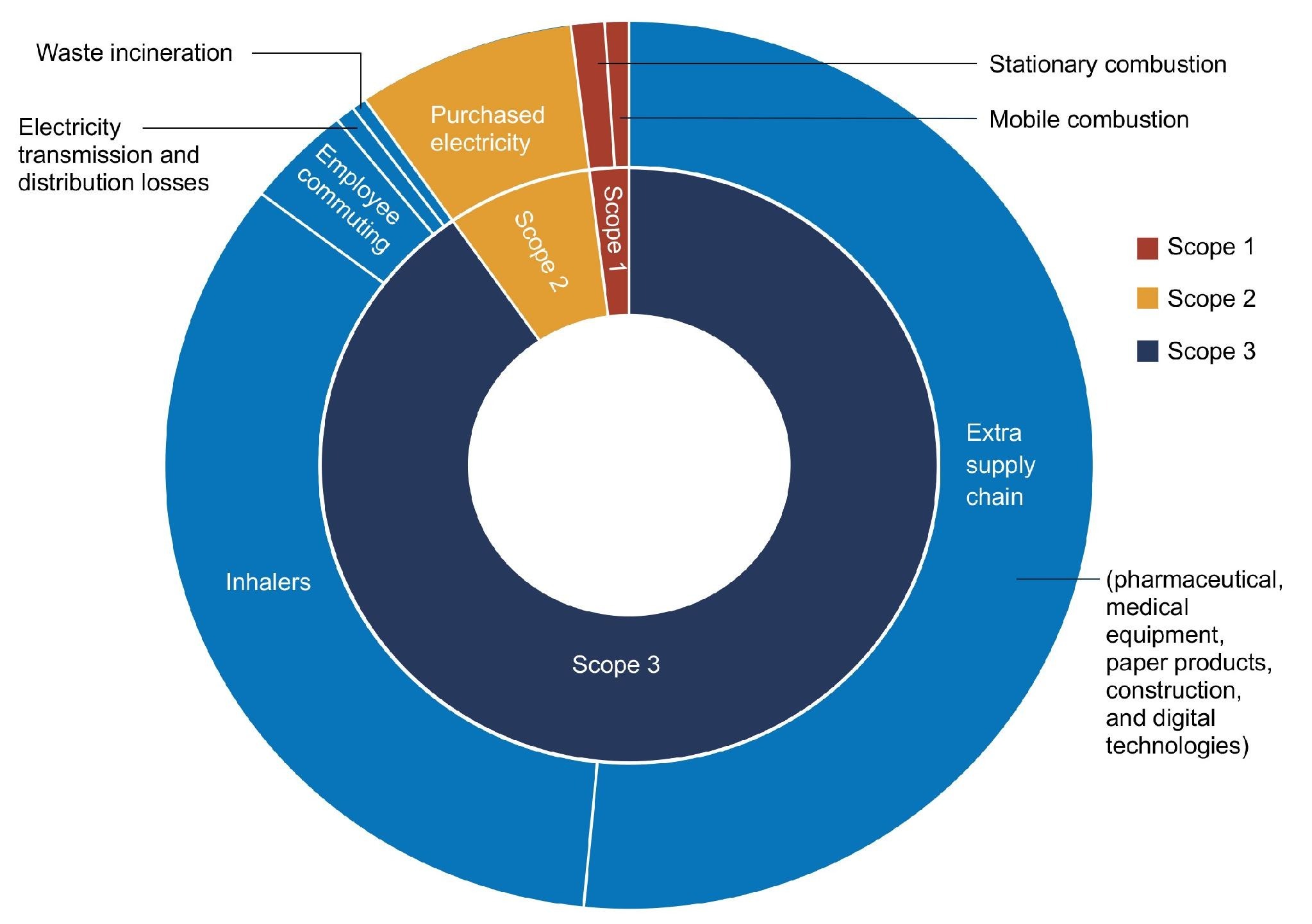
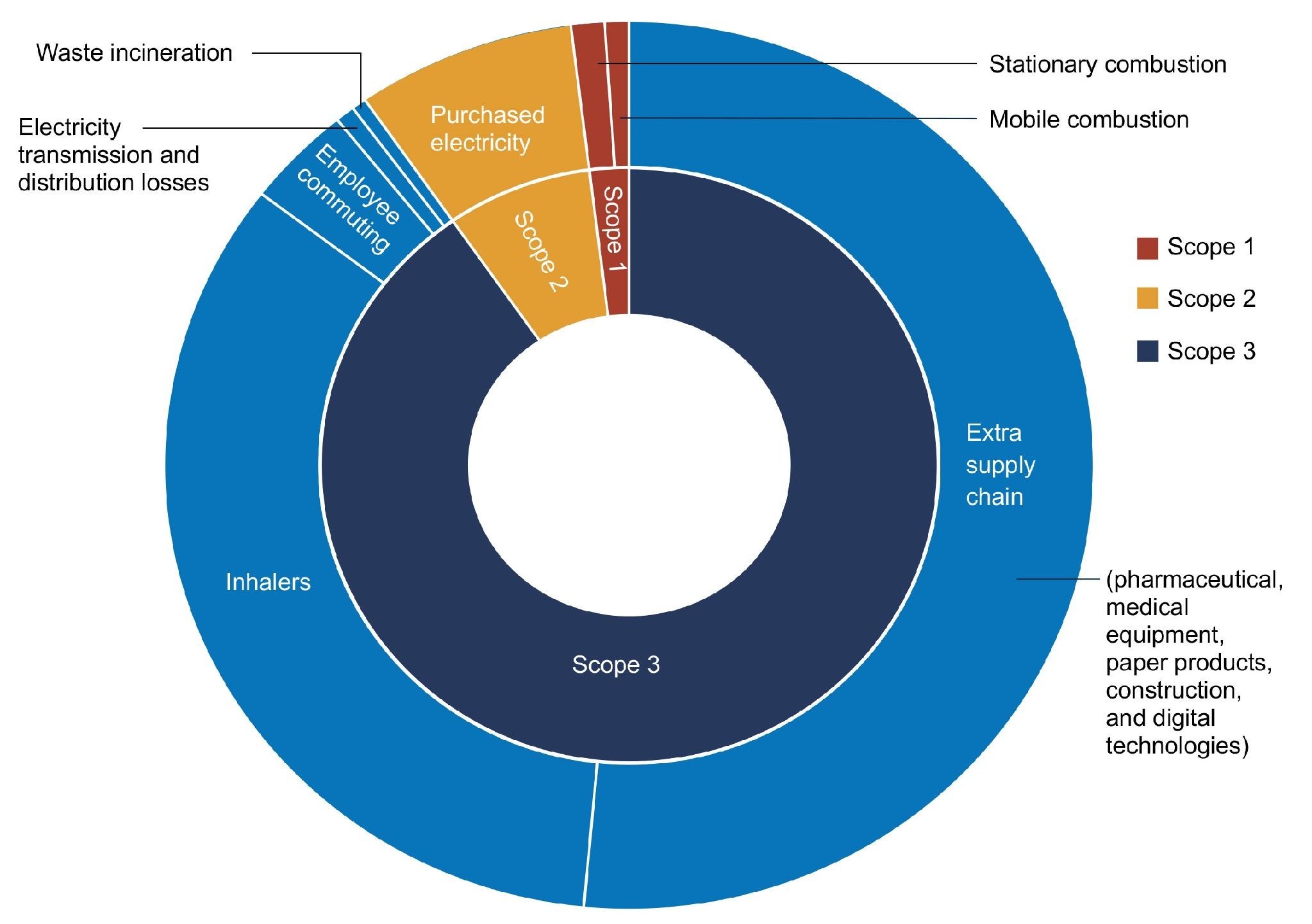
The VCA resulted in the 14 proposed solutions shown in Table 2, and the carbon footprint in the summary shown in Figure 3. Short-term solutions mostly related to purchase of equipment or supplies, training, re-designing existing service delivery, development of standard operating procedures, and providing feedback on behaviour. These solutions will need to be incorporated into annual planning and monitored to ensure implementation. Longer-term solutions will require more substantial funding for infrastructure changes or larger equipment, and implementation of community-orientated primary care, which is the new model of primary care. Higher level policy support and acquisition of additional funding will be needed.
The carbon footprint equates to 10.5 kg CO2e per primary care consultation with absolute emissions of 1 228 tonnes CO2e. Scope 1 accounted for 1.9%, scope 2 for 7.6%, and scope 3 for 90.5% of emissions. The extra supply chain accounted for 51.5% of the footprint and inhalers accounted for 34.0%.
Discussion
The climate VCA was a participatory process that engaged primary care providers in facilities as well as the sub-district management team, leading to a consensus-based prioritisation of interventions to strengthen climate resilience and environmental sustainability of primary care facilities. It stimulated debate and learning about the topic of climate resilience and environmental sustainability, which had not previously been considered. Alongside the carbon footprint assessment, it contributed to the sub-district’s organisational learning and health system development. The appropriateness and acceptability of the climate VCA to local staff was not a given, but recent experiences of climate hazards within the sub-district helped staff recognise its relevance. Nevertheless, the process needs to be efficient and avoid diverting staff from service delivery.
While the VCA produced clear results, its impact will depend on whether the resulting action plan is implemented. The sub-district and district management teams are responsible for implementation and many of the short-term goals can be achieved with existing resources. In 2025, the plan was also presented to the provincial climate change leadership within the Department of Health and Wellness, and they agreed that it aligns with departmental priorities and provides valuable evidence from the primary care context, although austerity conditions limit available funds. In 2026, the Department will launch their Climate Action Plan, which is supported by this research, and should release funding to further enable the action plan. It is clear that the final step of the VCA is assisting the sub-district to fund the action plan.
The CAA assisted the sub-district with an application for funding to a local philanthropic organisation with interest in climate change. In addition, the project presented the results to the Finance in Commons conference, a meeting of development banks who are also looking to support such initiatives. Linking climate resilience of health systems to the available climate funds for ‘loss and damage’ and ‘adaptation’ will be important. The implications for health and health systems have only recently gained traction in the global discourse on climate change.19
The climate VCA approach, informed by the WHO Operational Framework for Building Climate-Resilient and Low-Carbon Health Systems, has now been applied in several LMIC settings, including South Africa and Chad.20,21 Across these contexts, the VCA has been used to identify climate-related vulnerabilities, assess existing adaptive capacities, and support the development of locally relevant adaptation actions. The application of the VCA in Chad demonstrates its feasibility in a resource-constrained and humanitarian setting, while the South African application highlights its utility within primary health care systems and district-level planning processes. The process helps staff make the connection between climate change and important service delivery issues, to reflect on their own experience, and conceptualise key learning that can be embedded into an action plan.
Experience from these applications has also informed refinement of the methodology. For example, the Cederberg assessment identified the value of incorporating an additional contextualisation phase prior to facility audits and focus group discussions to ensure that assessment tools and processes were appropriately adapted to the local context. Such contextualisation is also a learning opportunity for the team performing the VCA as they reflect on what is relevant.
Collectively, these studies suggest that the VCA is a flexible approach that can be adapted across diverse health system contexts. However, evidence remains limited to a small number of settings, and further applications are needed to assess its transferability, scalability, and utility across different health systems in Africa. Ongoing work in Senegal, Bangladesh, Malawi, Kenya, and Ghana will contribute to this growing evidence base.
The climate VCA was led by an external team of experts. As the steps are relatively straightforward and do not require expertise in statistical or thematic analysis, we think it is possible that sub-district management teams could adapt and perform the VCA for themselves. We also plan to test this in another sub-district in the Eastern Cape. If the VCA can be adapted for this purpose, then it could be replicated by sub-districts throughout South Africa.
The carbon footprint assessment was among the first for primary care in Africa and identified some key issues. For example, the contribution of metered-dose inhalers (MDI) was unexpectedly high, and many primary care providers were unaware that hydrofluorocarbon propellants are potent greenhouse gases (up to 14 800 times more potent than CO2 and persisting between 1.4 and 270 years in the atmosphere).18 Although the issue has been recognised internationally, the extent of the problem was new learning for the organisation. The Department of Health and Wellness has a target of reducing its carbon footprint by 30% by 2030 and primary care could contribute substantially by shifting from MDIs to dry powder inhalers (DPIs). Such a policy change would also improve treatment adherence, as DPIs are easier to use, though currently more expensive. However, costs may fall through economies of scale, procurement negotiations, and ongoing pharmaceutical innovation in low-impact propellants.
Another example was waste incineration, and the Department of Health and Wellness has already introduced alternative waste management devices in larger tertiary and regional hospitals.22 These devices use a combination of heat and friction to turn hazardous waste into harmless pellets. The carbon footprint findings led to a discussion on whether such a device could be implemented in a sub-district as waste is already centralised for incineration.
The HCWH calculator was easy to use with minimal training and support, and the website does provide an online short course. Thinking through how to do the carbon footprint was a learning experience for the sub-district manager and research team. Some items were more difficult to ascertain, such as staff and patient commuting, as these are not usually monitored, and the tool does allow for missing data. Using financial expenditure to calculate the extra supply chain data was easy to perform but may have reduced the accuracy of the footprint. The calculator is currently being updated with the latest country-specific emission factors to be as accurate as possible.
The HCWH calculator has also been tested in Cape Town by groups of third-year medical students to collect data and calculate carbon footprints of their primary care facilities as part of their learning on planetary health. Other assignments have included evaluation of climate resilience and environmental sustainability using key questions from the VCA and evaluation of waste management practices in facilities and communities. Therefore, it may be possible to embed both processes, the VCA and carbon footprint calculator, into the training of health professionals as planetary health is incorporated into curricula.
This work has several limitations. First, the VCA provides a cross-sectional assessment of climate-related vulnerabilities and adaptive capacities and does not evaluate the implementation or effectiveness of the resulting action plan. Second, the findings are context-specific and may not be directly transferable to other health system settings. Third, while the VCA draws on multiple data sources and stakeholder perspectives, the assessment remains partly dependent on participant perceptions and self-reported information. Finally, although the VCA approach has now been applied in several settings, the evidence base remains limited, and further research is needed to evaluate its contribution to strengthening climate resilience in health systems over time.
Recommendations
We recommend that use of the VCA be scaled-up within South Africa and other LMICs to enable sub-districts to develop action plans to improve climate resilience and environmental sustainability. Initially, such work might need to be led by academics, but we hope that in future the process can be adopted by health services and districts. This approach is currently being tested by a sub-district in Amathole in the Eastern Cape, after initial training of the local family physician and a sub-district manager, with support from researchers at Stellenbosch University.
We recommend that health facilities make use of the HCWH Climate Impact Checkup calculator to investigate their carbon footprints as the tool is straightforward to use with available data. Facilities should be able to monitor changes in their footprint over time by repeated measurements using the same tool and implement quality improvement cycles.
These tools and processes can also be embedded into the training of health professionals, as is currently being done by third-year University of Stellenbosch medical students.
Our planned future research will evaluate the implementation and effectiveness of VCA-derived action plans and their impact on health system resilience over time. Further research is also needed to assess the scalability and transferability of the VCA across diverse health system contexts and to identify the training and support required for districts and health services to independently undertake assessments and implement adaptation actions. Further research could explore how climate resilience assessments can be integrated with environmental sustainability and carbon footprint assessments to support the development of climate-resilient, low-carbon, health systems.
Conclusion
The good practice described in this article illustrates how learning health systems can incorporate climate resilience and environmental sustainability into their thinking and planning. Learning is embedded throughout the process from raising awareness, to contextualising the tools, to evaluating facilities and reflecting on experience, considering and prioritising appropriate solutions, and incorporating new insights from a carbon footprint. Learning from these practices may be integrated into the leadership and management of facilities and sub-districts as well as into pre-service education. This learning should ultimately help to create more resilient health systems that can cope with climate-related shocks and stressors.
Acknowledgements
This work was supported by a TEAM grant from the Flemish Interuniversity Council (VLIRUOS) (ZA2022TEA526A103). We would like to thank all the healthcare workers and managers of the Cederberg sub-district who participated in the process.