
Introduction
Responsiveness has been flagged as a significant and key goal of health system performance alongside improving health outcomes, equality in the distribution of health status, and ensuring fairness in financial contributions for health.1 It is defined as “the ability of health systems to meet the legitimate expectations of populations for the non-health enhancing aspects of the health system”.1 Its significance includes improving health system users’ perceptions and health-seeking behaviours, making it easier for users to interact with the system, and providing better quality of care.2 However, the concept and how it is implemented are not well understood.3 This paper focuses on responsiveness beyond service level, adopting a systemic outlook that considers the broader population, multiple actors, and health system building blocks in providing feedback and generating response.3 One way for health systems to be responsive is to learn from the failures that lead to patient dissatisfaction and poor health outcomes.4 Responsiveness and learning are especially important because both concepts are considered to foster health system strengthening, functioning, effectiveness, and efficiency.5–7
Learning is described as “the capability for continuous improvement through the collection and analysis of data, creating new knowledge, and the application of the new knowledge to influence practice”.8 A health system is considered a learning health system (LHS) when it is able, through experience, to connect past actions, and whether or not they were useful, to influence future actions towards constant and efficient improvement.8 This paper draws from a framework that describes learning in a health system as occurring at individual, group and organisation/cross-organisation levels.7 Cross-organisation learning happens “between different organisations within a national, provincial or district health system, or across sectors and geographies”.7 In addition, the framework identifies three loops of learning. Single-loop learning enables the system to maintain its current policies and objectives, double-loop learning facilitates changes in objectives and policies, while triple-loop learning helps improvements to be made in the way the system learns.7 Finally, the ways of learning may include collecting information as well as distributing it (information gathering), collective engagement and reflection on issues to evaluate the impact of past actions so that decisions can be made for the future (deliberation), and action by practising, repeating and improving on the different practices and routines occurring in the system.7
The process of becoming an LHS is recognised from characteristics such as innovation; continuous collection, updating, interpretation, and use of the latest information to guide decisions; driving cultures of self-critique and reflection; leveraging technology innovations; deliberation or collaboration to determine ways to improve health system performance; changing structures in the whole system based on feedback received; drawing from past experiences in own/other health systems and engaging in forecasting and preparedness plans; and monitoring and evaluating activities.7 Achieving systemic learning in the context of this study means experiencing change in the way the system has been working that involves multiple actors and parts of the health system instead of focusing on individual patient and user feedback.3
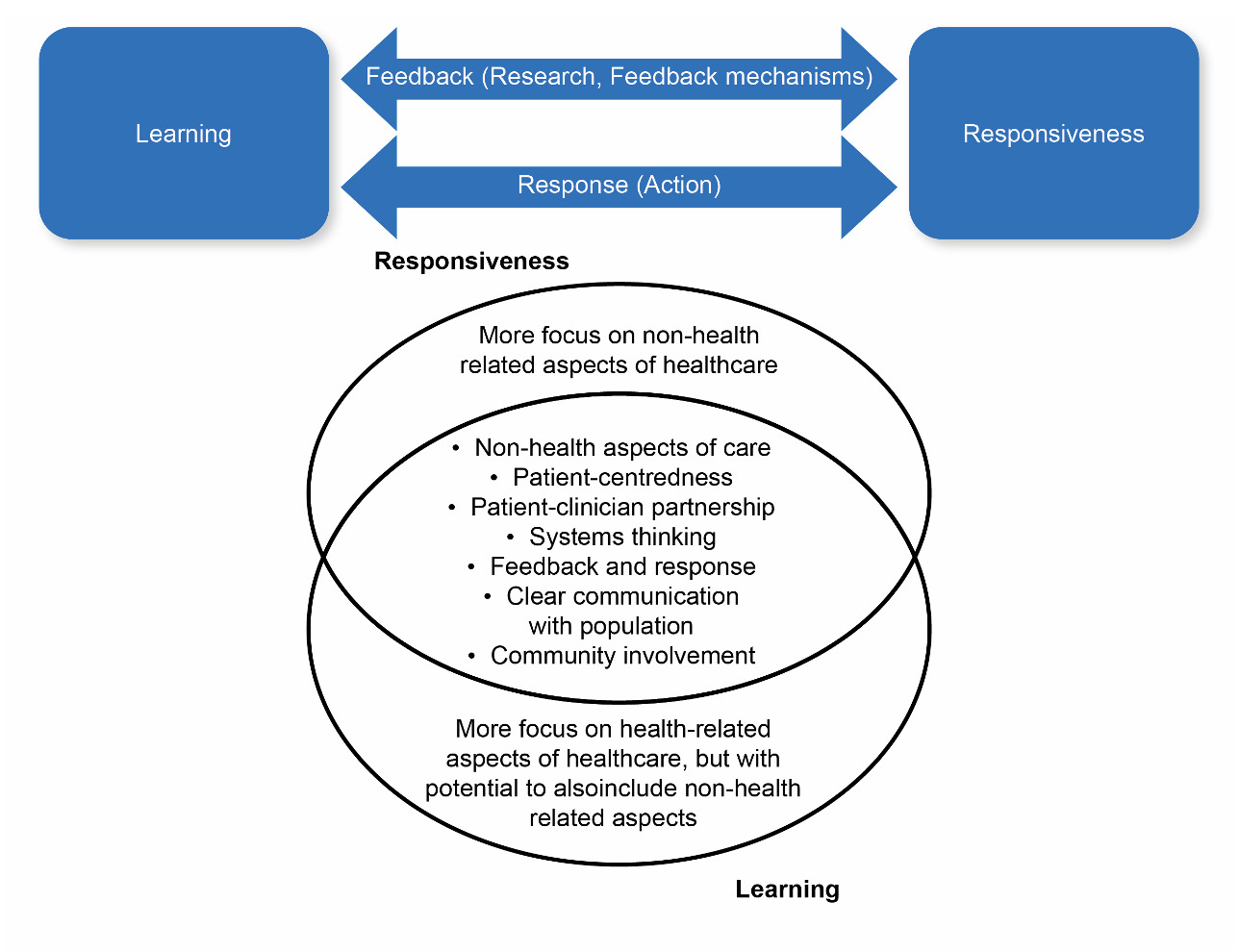
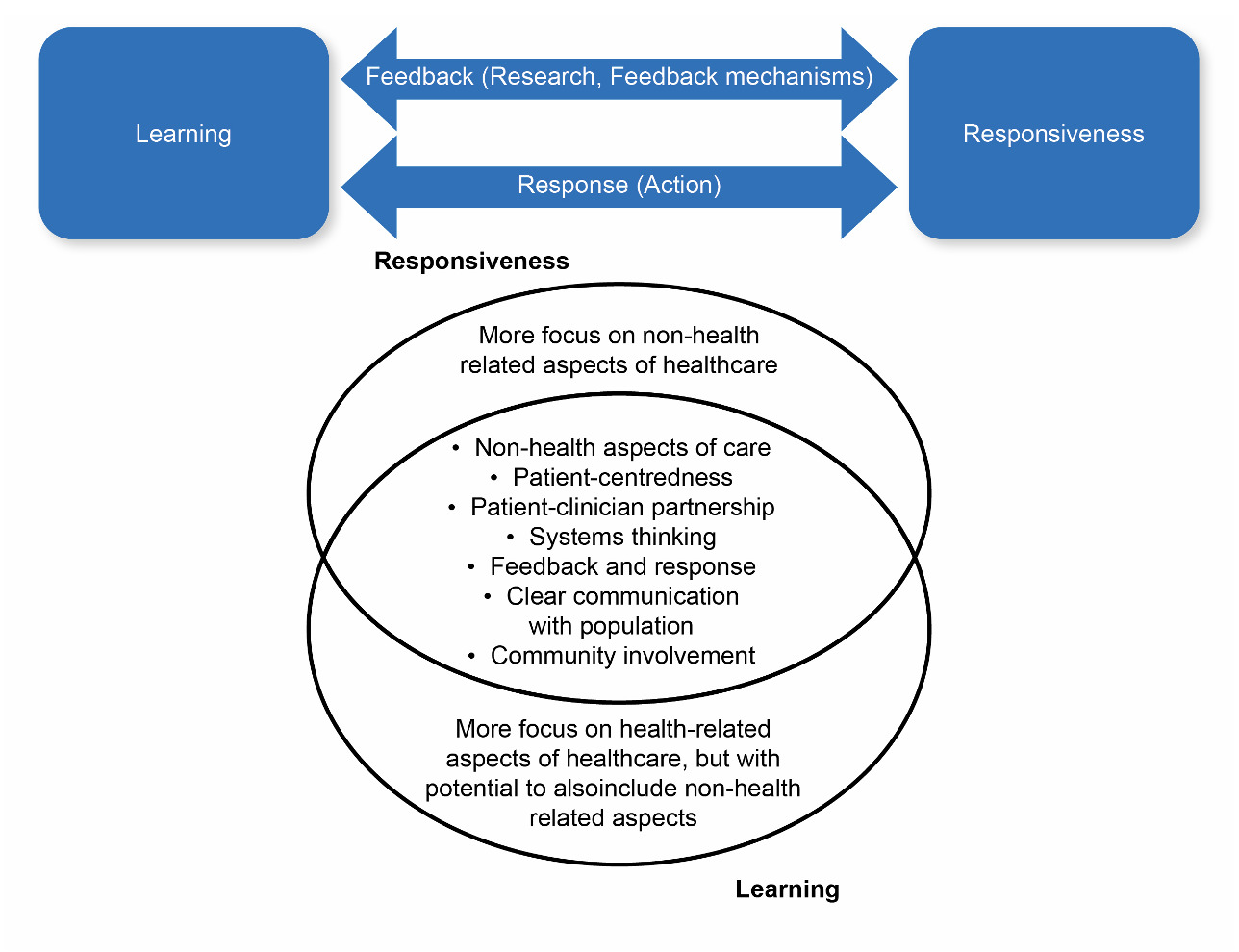
Taking the understandings of responsiveness and learning above, responsive LHSs continuously improve even non-health aspects of care based on past experiences to meet population expectations. The literature on LHSs suggests a link between such systems and responsiveness (Figure 1). For example, learning systems are related to non-health aspects of care which are characteristic of responsiveness such as communication, community involvement and patient centredness.9 Health facility committees (HFCs), which are also responsiveness feedback mechanisms, are considered deliberative avenues for learning.7
The focus of this paper is feedback and response, which together are one way of conceptualising responsiveness.3 To demonstrate the link, feedback and response are also highlighted in the LHS literature as a loop consisting of the collection of data and response to it through change.10 With a systemic view, “feedback would more likely be understood as multiple streams of feedback from varied sources, via varied formal and informal channels; and reaction might be understood as a sustainable systems-wide reaction/response”.3
Considering the importance of both the learning and responsiveness concepts for health system strengthening, the link between them is important as part of broadening these research areas to examine whether and how the health system learns from feedback mechanisms to achieve systemic, sustained change. This research explores these concepts within the Cape Winelands District (CWD) of the Western Cape province. The policy, contextual, and organisational factors that affect district health leaders’ decision-making towards acting or not acting on the multiple and varied forms of feedback they receive from the community are investigated. Furthermore, the perceptions and experiences of health leaders at sub-district level about information gathering through receiving feedback, deliberation about the feedback, and the responses they make when faced with multiple and varied forms of feedback to facilitate learning in the health system, are explored.
Method
A descriptive qualitative study was conducted in four phases: scoping review; contextual analysis; focus group discussions (FGDs) (one at district level, two at sub-district level); and data analysis. A member-checking process followed. The scoping literature review answered the question: How do global health systems demonstrate responsiveness at systemic level as learning health systems? It served to help understand how responsiveness and LHSs are conceptualised in the literature and to provide the theoretical and empirical foundation on which the primary research was built (Figure 1). The contextual analysis was based on a wide search for data relevant to responsiveness and learning in the CWD health system (Table 1). The Google search engine was used in searching for secondary data, and CWD’s five sub-districts, comprising 23 towns and 59 health facilities, were identified as search terms.
Phase three incorporated secondary analysis of three FGDs. The focus groups were conducted face-to-face, lasting about two hours each. Prior to participation, written consent was obtained from each participant (eight from Langeberg, nine from Drakenstein). Questions were semi-structured, probing about the experiences of each of the sub-district teams on responsiveness and learning. Convenience sampling was used for participant selection because strong relationships between the researchers and the local leaders in these sites were already established through a broader study, of which this paper forms a part, making participants more amenable to research.
The final phase comprised integration of the varied materials from across the phases, and further thematic analysis, followed by member-checking. The latter involved sending a preliminary draft of the article to respondents, with follow-up questions. Drakenstein sub-district provided responses via a Microsoft Teams meeting, while Langeberg responded via email.
Data analysis included document analysis for secondary data, which comprised skimming, thorough reading, and interpretation of all secondary data.11 This was done deductively12 looking for evidence of systemic learning through responsiveness elements (feedback mechanisms) and LHS dimensions (means, levels, and loops of learning). FGDs were transcribed and thematic analysis applied using an inductive12 approach to allow themes related to the research question to emerge. Thereafter the findings were integrated and interpreted through broader responsiveness and LHS concepts. Thematic analysis included familiarisation; coding; theme identification; theme review, definition and naming; and final analysis included interpretation, synthesis, and drawing out meaning to produce a report.13,14 Codebooks were developed to provide transparency and increase rigour.12 Debriefing with this study’s research supervisor, who is also the principal investigator of the broader study, and member-checking were done to support credibility. The positionality of the health system leaders as knowledgeable and experienced actors who worked in the health system at length brought confidence in their ability to respond to address the objectives and research questions with relevance.
Findings
Findings from each of the study’s phases are presented in themes that express if and how the CWD health system learns. The scoping review established that there are connections between LHSs and responsiveness in terms of feedback and response (Figure 1). Table 2 identifies the wide range of feedback mechanisms that exists across the sub-districts, illustrating also the various groupings of such mechanisms. Table 3 (Langeberg) and Table 4 (Drakenstein) summarise how these mechanisms translate into different means, levels and loops of learning, showing that the two sub-districts have similar means of learning, with only single- and double-loop learning identified.
Learning through feedback mechanisms: linking responsiveness to single-loop learning
Within the sub-districts, evidence exists for functionality of feedback mechanisms to feed information into the system, thereby demonstrating the link between responsiveness and learning through single-loop learning (see ‘information gathering’ row, Table 3 and 4). For example, in Drakenstein, Paarl Hospital has a complaints hotline and complaints/suggestion boxes from where feedback is collected, and a response is expected from relevant health system actors within 25 days. Montagu Hospital in Langeberg also has complaints/compliments boxes and media coverage of the health system receiving feedback exists.15
Both sub-districts have several ward committees and active NGOs which could facilitate movement from single- to double-loop learning (see ‘deliberations’ row, Tables 3 and 4). For example, Drakenstein confirmed that different heads of departments meet for discussion and deliberation about issues in the sub-district health forum twice a year. Feedback mechanisms such as ward committees also play a role in system learning by serving as platforms for discussions. Instances of action to respond to feedback through these mechanisms were reported, along with collaborations between some stakeholders (municipalities, political representatives) for system improvement based on feedback: “When clients complain about dirty toilets, the cleaners’ contract or requirement for cleaning toilets might increase and can be fed into SOPs to ensure compliance”, (Speaker 3, Langeberg member-checking, February 10, 2023). However, the functionality of these feedback mechanisms was not always optimal: “We had previous clinic committees that were very functional. But only at certain facilities, not everywhere”, (Speaker 4, Drakenstein FGD, July 26, 2022). Thus, although mandated through national and provincial laws, feedback mechanisms such as clinic committees and hospital boards often operate informally; and no hospital board was identified for Drakenstein as of 2022.
Nonetheless, the intention to be responsive seemed a matter of importance since there were still efforts to put those mechanisms in place formally. These efforts also suggest a learning process that would allow graduation to double-loop learning and potentially triple-loop learning if questioning and application based on effectiveness occurred: “What we [are] currently busy with the health committees is that the appointments by the Minister of Health are concluded, and we [are] currently busy with formal training of health committees. So that’s been a learning process as well”, (Speaker 1, Drakenstein member-checking, 06 February, 2023).
Contextual constraints
While information is fed into the system for learning, including through feedback mechanisms, a major barrier to consolidating learning in the sub-districts were contextual constraints related to financial and human resources, infrastructure, and long processes of change that sometimes leave the teams frustrated: “So, I mean, it’s good to implement policies and stuff and how to get information but then you must give people the hands. There’s even a bigger problem like lack of funding, if you’ve lack of hands how you gonna execute the goals?”, (Speaker 7, Langeberg FGD, July 26, 2022); and “I think some of our clinics have been on the infrastructure list for ten years. That’s one of the frustrations, is that when you do the planning and the business plan, by the time the facility is built its already too small for the population”, (Speaker 3, Drakenstein FGD, July 26, 2022).
Receptivity and system reactivity
The ‘action’ row in Tables 3 and 4 exemplify some of the actions the sub-district teams took to respond to information gathered. However, difficult contextual issues reduced sub-district teams’ receptivity to this feedback and their agency to respond. Receptivity and pro-active decision-making were mainly driven by pressure, wherein issues that were seen as urgent, such as those that brought the most reputational risk, were prioritised. Learning therefore did not happen organically as a direct result of feedback. Rather, a more short-term, reactive approach to responding rather than long-term systemic learning, was adopted: “I personally feel we’ve been managing all the problems that we’ve had reactively, because we’ve been forced to do that because of lack of resources, lack of infrastructure, lack of money”, (Speaker 9, Langeberg FGD, July 26, 2022). Yet some evidence of reflective learning did emerge: Langeberg’s adoption of Drakenstein’s year-long chronic medication scripting practice during COVID-19, and Drakenstein’s use of biannual waiting-time surveys to create quality improvement plans, illustrate attempts at double-loop learning based on past actions (Table 3, Table 4).
Power
Power dynamics that come with system hierarchies deter sub-district teams from taking charge of responding to the needs of the system: “And then I think within our specific district there’s also issues of, let’s call it power feuds or power struggles because there’s certain things that we would be able to do ourselves, or we’d be able to coordinate ourselves, but then there’s a bit of tension between the district office and the sub-district sometimes because we’re doing things we shouldn’t have done that we should have worked through them”, (Speaker 7, Langeberg FGD, July 26, 2022).
Difficulty in embracing learning due to restricted autonomy influenced by unbalanced power dynamics also speaks to the issue of receptivity: that is, although responsiveness may be a goal of health systems, realising that goal depends on the ability and willingness of the relevant actors to respond.16
Discussion
This paper explored if and how health system learning is enabled through responsiveness mechanisms in two sub-districts in the CWD. Results illustrate that the two sub-districts investigated, Langeberg and Drakenstein, are learning health systems using varied ways of learning, with feedback mechanisms playing an important role in facilitating this learning.
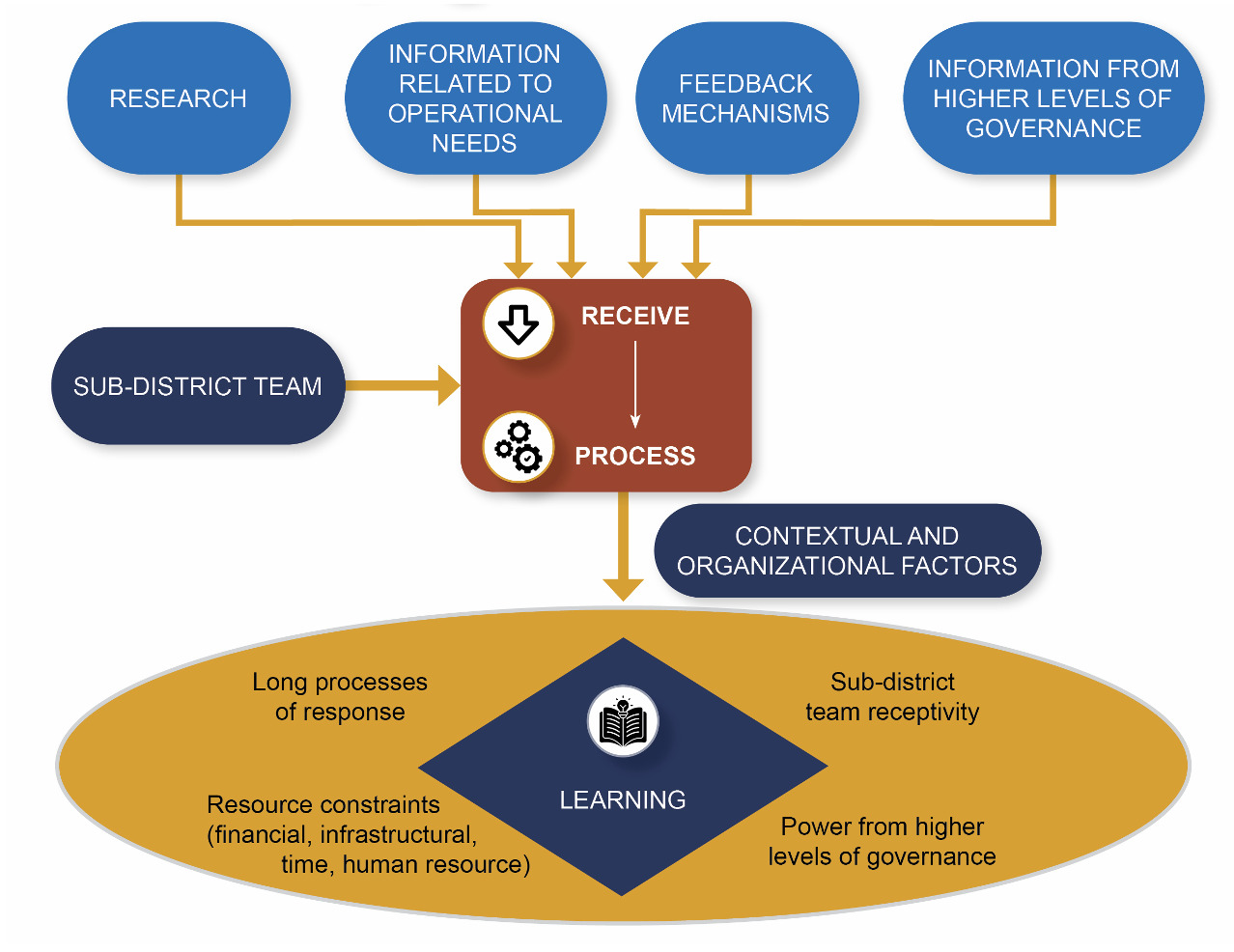
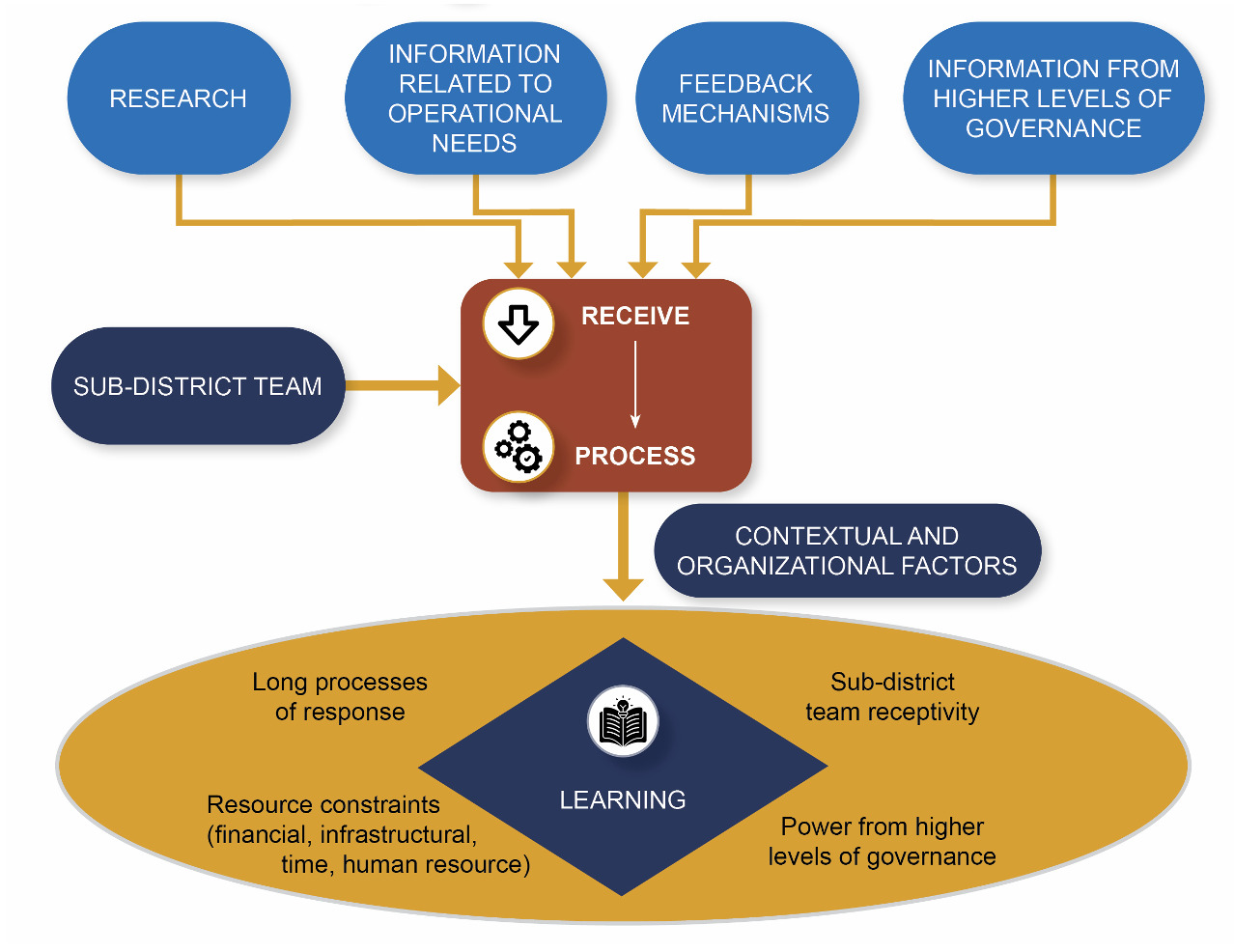
Figure 2 illustrates how feedback mechanisms are received and processed by sub-district teams. It suggests that learning ultimately is determined by power dynamics within the overall health system, other contextual constraints, and system receptivity and reactivity. These factors influence whether or not feedback mechanisms translate into meaningful, systemic learning.
A central finding is that feedback mechanisms are common enablers of learning which also drive responsiveness, demonstrating a direct expression of the link between responsiveness and learning. As information carriers, their existence creates a conducive environment for single-loop learning. However, to graduate to double- and triple-loop learning, more deliberate action is required. Fostering organisational culture and behaviours, including collaboration between actors, patient/community participation, and interaction with health system-related information, are responsiveness-related activities that form part of becoming an LHS.17
As Figure 2 illustrates, power dynamics are a particularly important barrier to learning in both sub-districts. Understanding power imbalances and different priorities at the different levels of health system governance may help enhance responsiveness.18 Lack of engagement between actors can create a vicious cycle of division and hierarchical structures that centralise decision-making to the exclusion of important health systems stakeholders like patients, communities, and local-level leaders such as sub-district teams.19 A more bottom-up approach to support learning, starting with engagement at the frontline of responsiveness, is likely preferable and may help address power hierarchies.20
Contextual constraints such as finances, infrastructure, time and human resources are another key barrier to systemic learning beyond single-loop learning (Figure 2). They reduce sub-district capacity to act in a meaningful way. Issues like long processes of change bring feelings of frustration about the ability to effect change as deemed necessary. Contextual constraints also shape receptivity to feedback. Sub-district teams struggle to commit to sustained improvement as a result of feedback and their response is rather moulded by these barriers into a pattern of reactivity. To consider the implications for health system strengthening (HSS), it is important to allow for both the hardware and software of health systems.21,22 Responsiveness mechanisms can be seen as hardware, but a systemic approach must also consider the other hardware (tangible health system aspects such as infrastructure, finances and technology) and software (values, norms, ways of communicating and relationships) that impact the link between mechanisms and learning.23 A systemic approach that considers multiple actors including communities, sectors, broader social, structural and environmental determinants, as well as the role of power and trust, is crucial to both learning and responsiveness for HSS.19 Factors such as building understanding relationships, learning, and collaborating across different levels of governance, are pivotal in supporting responsiveness and attaining the required impact in health systems organisations.24,25
Limitations
In the contextual analysis, the limitation of searches to online data due to travel restrictions because of the COVID-19 pandemic may have resulted in missing paper-based media. In data collection, not all study-specific questions could be asked because the FGDs were primarily intended to address the primary study’s questions. However, member-checking enhanced the paper’s trustworthiness, and common themes were drawn through synthesis of all these different data types.
Recommendations
Strengthening feedback loops
A priority for HSS in sub-districts like Langeberg and Drakenstein is to ensure that existing feedback mechanisms are not just mandated or established structurally, but also that feedback is received, recorded, and responded to in a timely manner. In addition to the assimilation of new information, learning organisations need to attain learning capacity that goes beyond just basic error correction into the more radical changes that redefine the way the whole organisation functions.26 To graduate from single- to double-loop learning, sub-district teams can establish structured platforms for deliberation to not only note, but also systematically question and make changes to support the effectiveness and responsiveness of the system. Drakenstein and Langeberg have already begun to do this through the creation of preparedness and quality improvement plans. To transform towards triple-loop learning, different levels of the health system could collaborate in reviewing policies and processes to reduce the gap between high-level directives and challenges in ground-level implementation. Such collaboration could also help address the power imbalances that currently exist. Decentralising decision-making and deliberately cultivating understanding relationships between national, provincial, district, and sub-district level may help strengthen collaborative and learning environments. Sustained, long-term investment in health system learning activities is necessary to reduce the overwhelming pressure health systems face and to help them stay prepared so they can be responsive.
Conclusion
The CWD experience suggests that health systems in low- and middle-income countries (LMIC) contexts can work towards becoming responsive LHSs with feedback mechanisms acting as the link between responsiveness and learning. However, for greater impact, LHS development requires intention, a structured approach, and enough funding and resources.27 Three actions are suggested to drive learning in a health system: placing learning alongside health system values such as human rights and equitable access; integration of research into policymaking through coproduction of knowledge by health system managers, researchers, and service users; and strengthening organisational capabilities for knowledge-production and innovation.28 The idea of LHSs seems under-explored, especially in LMICs. However, examples such as the CWD experience demonstrate that it is possible for health systems in LMICs to work towards becoming LHSs through commitment and actions to learn and adapt, and in that way develop towards being responsive health systems.