
Introduction
Chronic diseases constitute a critical and escalating public health challenge globally and in South Africa. While non-communicable diseases (NCDs) are frequently emphasised, disease burden in low- and middle-income countries (LMICs) increasingly reflects co-existing chronic communicable and non-communicable conditions, including mental health disorders, human immunodeficiency virus (HIV) and tuberculosis (TB).1–5 These chronic conditions share common long-term care needs, including sustained treatment adherence, routine monitoring, and shared risk-factor management.4–6 Globally, an estimated 41 million deaths each year are attributable to non-communicable diseases, with the majority occurring in LMICs where premature mortality remains disproportionately high.1,7,8 Projections based on the Global Burden of Disease Study suggest that by 2030, non-communicable diseases will overtake communicable, maternal, neonatal and nutritional diseases combined as the leading cause of mortality in sub-Saharan Africa.9
South Africa reflects this epidemiological transition, with chronic diseases having surpassed communicable, maternal and child health conditions as leading contributors to mortality since 2009.8,10 By 2018, chronic diseases, including cardiovascular disease, diabetes, chronic respiratory disease, cancer, HIV and TB, were the foremost contributors to death and disability nationally.8 Importantly, an increasing proportion of individuals live with multimorbidity comprising more than one chronic condition.8,10
Evidence from South Africa demonstrates that multimorbidity is common and increases with age, underscoring the need for health systems that manage multiple conditions concurrently rather than through vertical disease-specific programmes.5,8,11,12 This provides a strong rationale for integrated chronic disease care. Patients commonly present with overlapping chronic conditions, all requiring coordinated, longitudinal care. These patterns have been described in routine primary health care settings and highlight the operational complexity of managing multiple chronic conditions within fragmented systems.5
In South Africa, the integrated chronic disease management model was introduced to reorganise primary health care services around the long-term needs of patients with multiple chronic conditions.13–15 Integration aims to improve continuity of care, efficiency, and patient centredness by strengthening clinical processes and facility organisation.13–15 However, subsequent evaluations show variability in implementation with documentation practices, staff capacity, and local leadership significantly influencing implementation commitment.15–17 Weak routine monitoring and fragmented documentation systems further undermine integrated chronic disease care.
South Africa’s health information systems studies show that facility-level clinical records are often incomplete, indicators are inconsistently captured, and data poorly integrated across programmes.18–21 Parallel documentation systems across HIV and NCD programmes have been noted to compromise continuity of care and data quality, despite policy commitments to integration.6
Preliminary Ekurhuleni district assessments conducted by the research team identified similar challenges: weak routine monitoring systems, inconsistent completion of existing clinical tools, and parallel use of multiple disease-specific forms. This fragmentation resulted in incomplete datasets, reduced data reliability and compromised continuity of care. Importantly, the need for integration was identified from within the district by clinicians and managers alike.
In South African primary care settings, early engagement of frontline staff and local ownership have been shown to enhance acceptability, uptake and sustainability of integrated interventions.12,22 Considering this, the Ekurhuleni health district, with approximately four million residents, served by six public hospitals and 93 primary health care facilities, convened a multidisciplinary task team in 2021.23,24 Public health medicine specialists, nurses, family physicians, programme managers, pharmacists, allied health professionals and administrative staff co-developed an integrated chronic disease clinical stationery package (Appendix 1) aligned to national templates. This bottom-up approach aimed to ensure the intervention was contextually relevant, feasible and aligned with routine clinical workflows. This iterative, frontline-led approach reflects a learning health system (LHS), where clinical experience continuously informs practice improvement.25
The resulting intervention integrated history, diagnosis, monitoring, follow-up and risk factor documentation for multiple chronic conditions into a single standardised clinical record, continuation sheet, and comprehensive screening checklist. The integrated chronic disease clinical stationery comprising the main clinical record and continuation sheet, was designed as two A3 folded pages to support longitudinal documentation across visits. The comprehensive screening checklist was included to standardise screening and risk factor assessment across multiple chronic conditions. By consolidating at least 10 previously separate disease-specific forms, the stationery aimed to enhance record completeness, reduce fragmentation and support both clinical care and health system decision-making. This approach aligns with the World Health Organization guidance on coordinated information systems for multimorbidity and South Africa’s Ideal Clinic Realisation and Maintenance framework, which emphasises integrated documentation and continuity of chronic care.26
This paper focuses on the pilot phase of implementing the integrated stationery and screening checklist in Ekurhuleni district. The study evaluates early implementation by exploring acceptability, identifying facilitators and barriers influencing implementation, and assessing appropriateness and usability through qualitative and quantitative inquiry. By foregrounding chronic disease integration and a clinician-led, bottom-up process, this study offers insights to inform future district-wide and provincial scale-up.
Method
Study design
A mixed-methods design was used to evaluate the pilot phase of implementing the integrated chronic disease clinical stationery and comprehensive screening checklist (hereafter referred to collectively as the tool/s) in the Ekurhuleni district in 2022–2023.
Study site
The study was conducted in the Ekurhuleni district and involved six primary health care clinics, A-F (Table 1). One large and one smaller facility were purposively selected from each sub-district.
Study population and sampling strategy
The study population comprised all healthcare workers who interacted directly with the stationery and screening checklist. End users were nurses and doctors responsible for completing the stationery during all new patient consultations. Role players included operational and facility managers, family physicians, and administrative staff overseeing implementation processes.
Purposive sampling was used for the qualitative component to recruit participants with substantive experience of the intervention. For the quantitative component, all completed stationery, screening checklists and evaluation forms from the six participating facilities were included; no sampling was required.
Ethics approval
Ethics approval was obtained from the Wits Human Research Ethics Committee (M230262) and the Ekurhuleni Health District Research Committee (13/02/2023/01).
Data collection and analysis
Qualitative component
Focus group discussions (FGD) (n = 6) and key informant interviews (KII) (n = 13) were conducted in-person at the pilot facilities using semi-structured interview guides. Interviews and FGDs, conducted in English, lasted approximately 45–60 minutes and explored experiences of tool use, barriers and facilitators, training needs, and suggested improvements. Participants were provided with information leaflets prior to participation, and written informed consent, including for audio recording, was obtained.
A reflexive thematic content analysis, following an inductive coding approach, was conducted using MAXQDA (2022).27,28 Transcripts were reviewed through successive rounds of analysis and coded systematically, with themes and sub-themes derived from code frequencies. Findings were further analysed using an implementation outcomes framework encompassing acceptability, appropriateness, and feasibility, providing an implementation science lens for interpreting how the tool was experienced and adopted.29 Trustworthiness was enhanced through triangulation across KIIs, FGDs, and quantitative data sources.
Quantitative component
A record review was conducted for all completed clinical stationery (n = 91) and screening checklists (n = 72) (Table 1). A structured data extraction tool was used for the record review, consisting of closed-ended yes-or-no questions with embedded open-ended fields to capture explanatory and contextual information from completed tools. Each component of the main clinical record, continuation sheet and screening checklist was evaluated to assess adherence to intended use, completeness, accuracy and space. For each instrument, four indicators were rated a priori: (1) filled in (at least one entry recorded in the section); (2) filled completely (all applicable fields in the section completed); (3) filled correctly (entries conformed to the intended format and coding instructions); and (4) adequate space (sufficient room for a legible entry). Each indicator was reported as a percentage of the applicable sections or fields within that instrument (main clinical record, continuation sheet, or screening checklist), using the instrument’s own total as the denominator throughout. Self-administered evaluation forms completed by end users immediately after using the intervention were also collected and included in the analysis.
Descriptive statistics, including frequencies and percentages, were generated for all record review and evaluation form variables.
Findings
Table 1 presents the study participants and data sources across pilot facilities.
Qualitative findings
Three interrelated themes emerged describing how the tools were experienced and implemented in routine primary health care settings.
Theme 1: Working with the tools in everyday clinical practice
Learning curve and perceived usability
Participants commonly described the tools as logically structured and easy to follow once familiarity was established. Clear language and a guided flow were viewed as enabling use across different cadres of healthcare workers: “It is easy. The language that is used here, it’s very understandable. It’s a language that is in the level of all the healthcare workers”, (KII 1).
Several participants also reported initial difficulty navigating sections requiring clinical scoring, reflecting an early learning curve: “No, initially it was not easy to fill before we understood it. But now I think I can fill it”, (KII 2).
Time and space as practical constraints
Concerns about limited writing space and time required to complete the tools were prominent. Participants noted that while the tools prompted comprehensive documentation, insufficient space in some sections prevented meaningful clinical notes: “The space I think it’s a challenge … the stationery just leads you, so by leading you, you need to write, and the space is not enough”, (FGD 3).
Time pressure was particularly evident during initial consultations, with some participants indicating that completion required assistance from colleagues: “Yeah. You can’t really do it alone. Or you can do it alone, but it’s time consuming”, (FGD 1).
Adaptation through familiarity
Despite these challenges, practicality improved with repeated use, as familiarity with the layout and content reduced completion time and eased navigation, suggesting that usability was shaped by experience rather than design alone.
Theme 2: From fragmented forms to structured chronic care
Standardisation and continuity across conditions
Participants valued integrating multiple chronic conditions into a single tool. It was perceived as improving organisation, reducing duplication and supporting continuity of care: “In my experience, the tool is very efficient, and I think it will be a good tool to be used for the clinic. If it’s the only tool, we’ll be using for everybody”, (KII 9).
The longitudinal structure was seen as particularly beneficial for follow-up consultations, allowing clinicians to track patient progress more coherently: “We are able to follow on this one. [Usually], if there’s a chronic patient … we just write on the progress, and you know, sometimes they get lost, but this one, I feel it’s going to be much better”, (FGD 6).
The tools as a clinical guide
Beyond documentation, the tools were frequently described as functioning as clinical guides, supporting more systematic history-taking and reducing missed information: “With this one it works as a guide to you as well. It’s also guiding you that, OK, these are the critical questions that you need to ask for”, (KII 10).
Tensions between comprehensiveness and feasibility
While comprehensiveness was viewed as a strength, it also contributed to perceptions of length and complexity. Some participants questioned the feasibility of completing all sections during routine consultations under existing workload constraints: “We must know the benefit of the tool. Because with workers, most of the time they see this as a workload, we’ve got too much on our plate”, (KII 1). Nevertheless, most participants expressed a clear preference for a single standardised tool over multiple disease-specific forms: “So, if there is one standard file that is used, it’s better. Then we can all even improve on the same file every time”, (FGD 3).
Theme 3: Implementation shaped by context, not design alone
Facility level constraints and staffing pressures
Participants commonly located implementation challenges within broader health system constraints, particularly staff shortages and competing demands, which limited time for comprehensive documentation: “It was difficult … like it’s going to be difficult even to continue [use of the tool] because of shortage of staff. Nothing else”, (KII 5). Longer consultations associated with the tool were also perceived to increase patient waiting times and dissatisfaction.
Behavioural and organisational readiness for change
Resistance to change and limited initial training affected uptake with insufficient orientation contributing to uncertainty and inconsistent use: “Not everything [was easy to fill]. There are those elements our clinicians need to get training or in-service on …”, (KII 3).
Enablers for sustained implementation
Participants identified ongoing in-service training, supportive supervision, and routine audits as essential for reinforcing correct use and as key to sustainability:
I also think the continuation of the in-service training. Let us not just do it once and then just leave it at that. And I think the other important thing to have is maybe an audit tool. An audit tool to say let us just audit it ourselves now and then, maybe quarterly, maybe audit a few files so that we learn from each other, the mistakes that we are doing, so that we can correct them. (FGD 4)
Practical recommendations included introducing the tool in booklet format, ensuring reliable supply and allowing phased implementation: “I think it’s better, especially if it’s gonna be in a form of a booklet … you don’t have to staple the progress notes and what not”, (KII 11).
Quantitative results
Record review findings
The record review showed how the stationery (n = 91, main clinical record and continuation sheet), and screening checklist (n = 72) were completed in practice. Unless otherwise stated, percentages below refer to the proportion of applicable sections within each instrument, as defined in the Method section.
Main clinical record
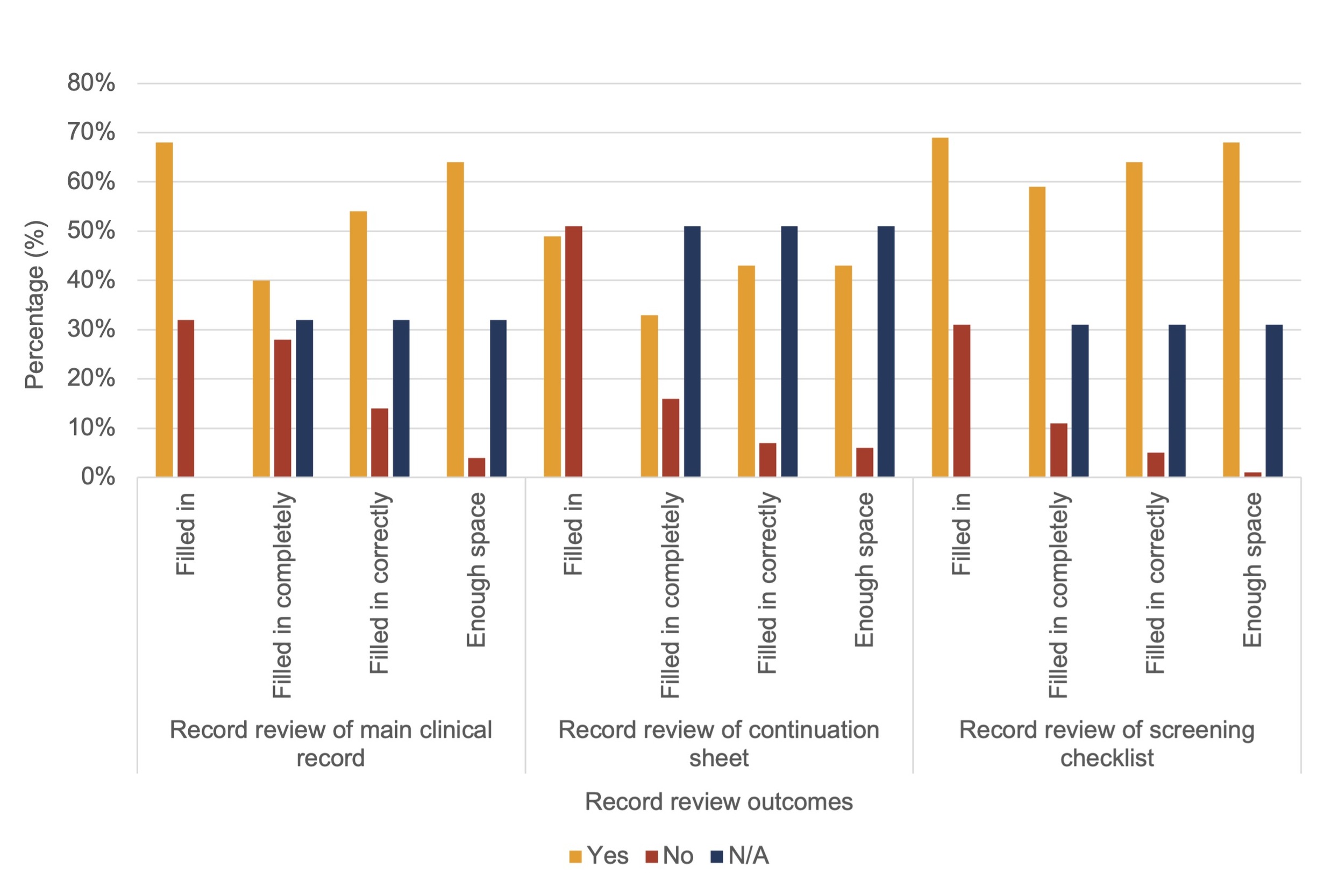
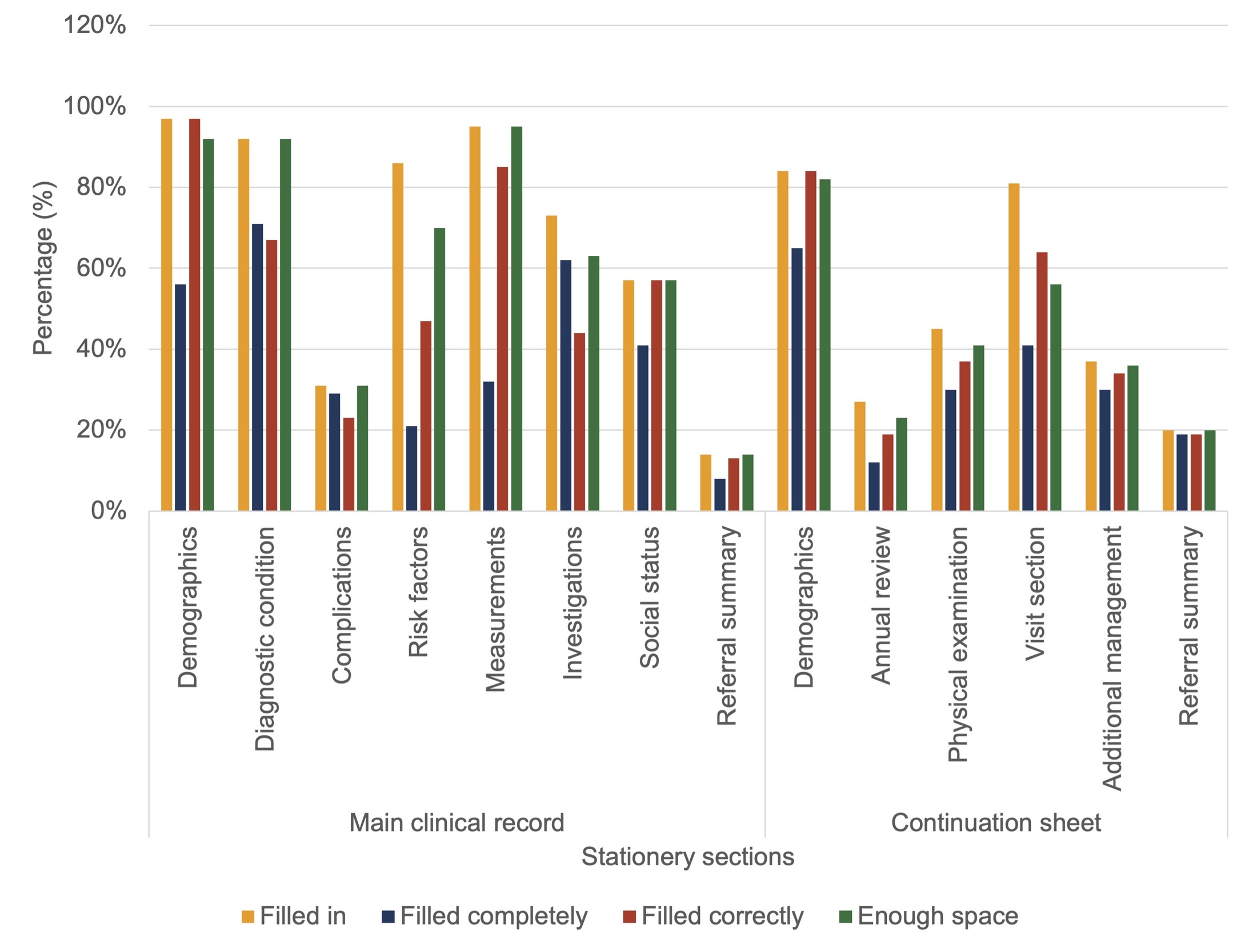
Sixty-eight percent of sections in the main clinical record were filled in, although only 40% were filled completely and 54% filled correctly. Most records (64%) had adequate space for documentation (Figure 1).
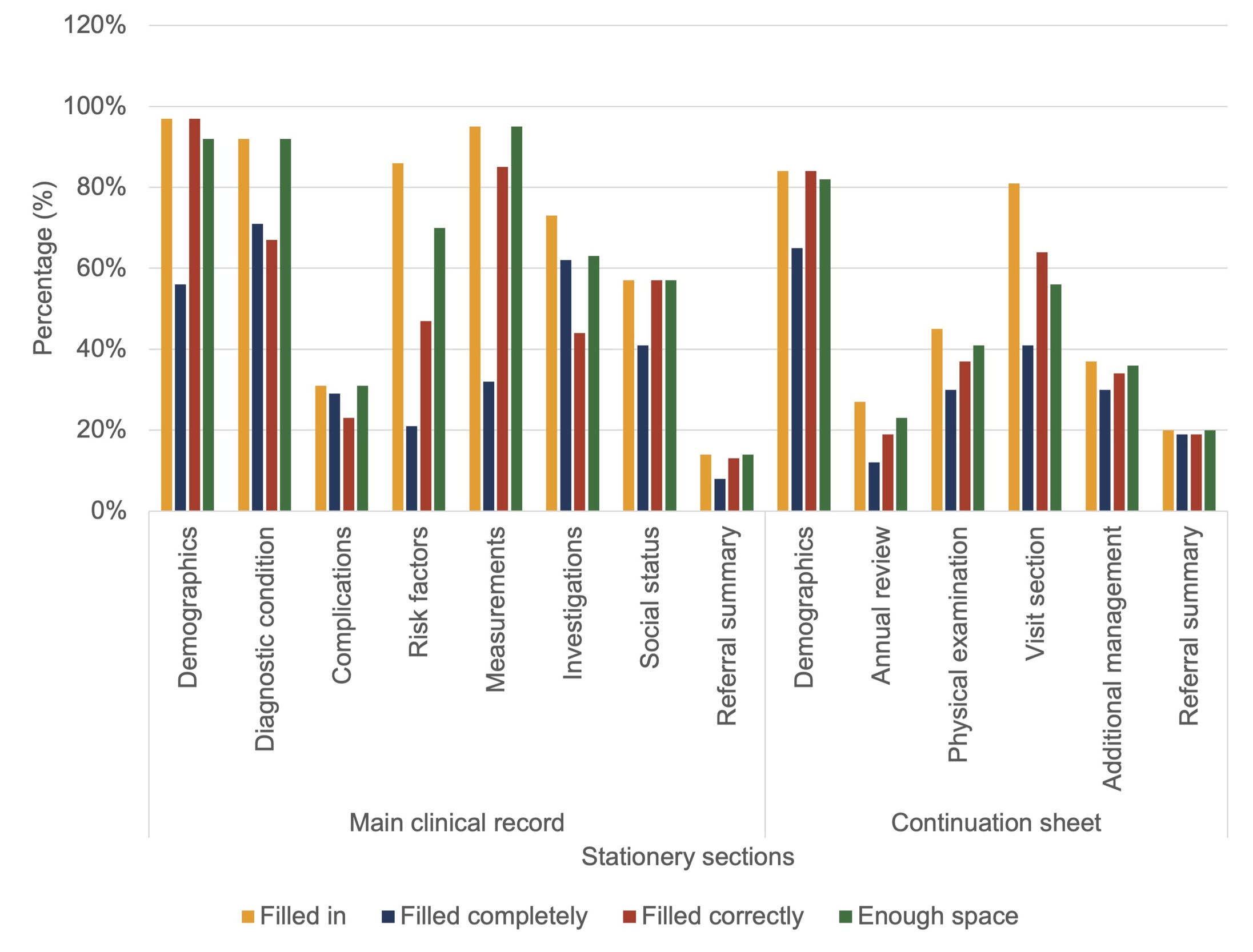
Several common gaps emerged. Demographic fields such as date of birth, identity number, and next of kin details were frequently missing. Diagnostic conditions often lacked dates, and the cardiovascular risk assessment was frequently skipped. Measurement fields beyond the first blood pressure reading were inconsistently completed, and routine values such as body mass index and height were not consistently recorded. Investigations regularly lacked barcodes or dates despite samples having been taken (Figure 2).
Errors included circling conditions rather than entering dates, incorrect use of ‘N/A’, misclassifying new diagnoses as complications, misplaced blood pressure values, and confusion documenting laboratory tests.
Continuation sheet
Completion of the continuation sheet was notably lower than for the main clinical record. Only 49% of sheets were filled in, and 33% were fully completed. Correct completion was observed in 43%, and 43% were judged to have adequate space (Figure 1).
The annual review history was the least fully completed section (12%), with many sheets containing only basic demographic information and signatures. The physical examination section was partially completed in 30% and the visit section was fully completed in 41%, with psychosocial, lifestyle and adherence components frequently omitted. Referral summaries were completed in only 19%, with dates and feedback rarely documented (Figure 2).
Common errors included circling items with no tick box provided, inappropriate responses such as ‘Normal’ in treatment fields, inconsistent medication documentation, and poor updating across visits.
Screening checklist
Completion of the screening checklist was relatively higher than for the stationery. Sixty-nine percent of forms were attempted, 59% fully completed and 64% correctly completed. Adequate space was reported in 68% (Figure 1).
Errors included inappropriate use of dashes instead of ‘Yes’ or ‘No’, circling rather than entering responses, applying questions to non-applicable patients, and misplaced dates.
Evaluation form results
Evaluation forms reflected mixed perceptions of the stationery and screening checklist.
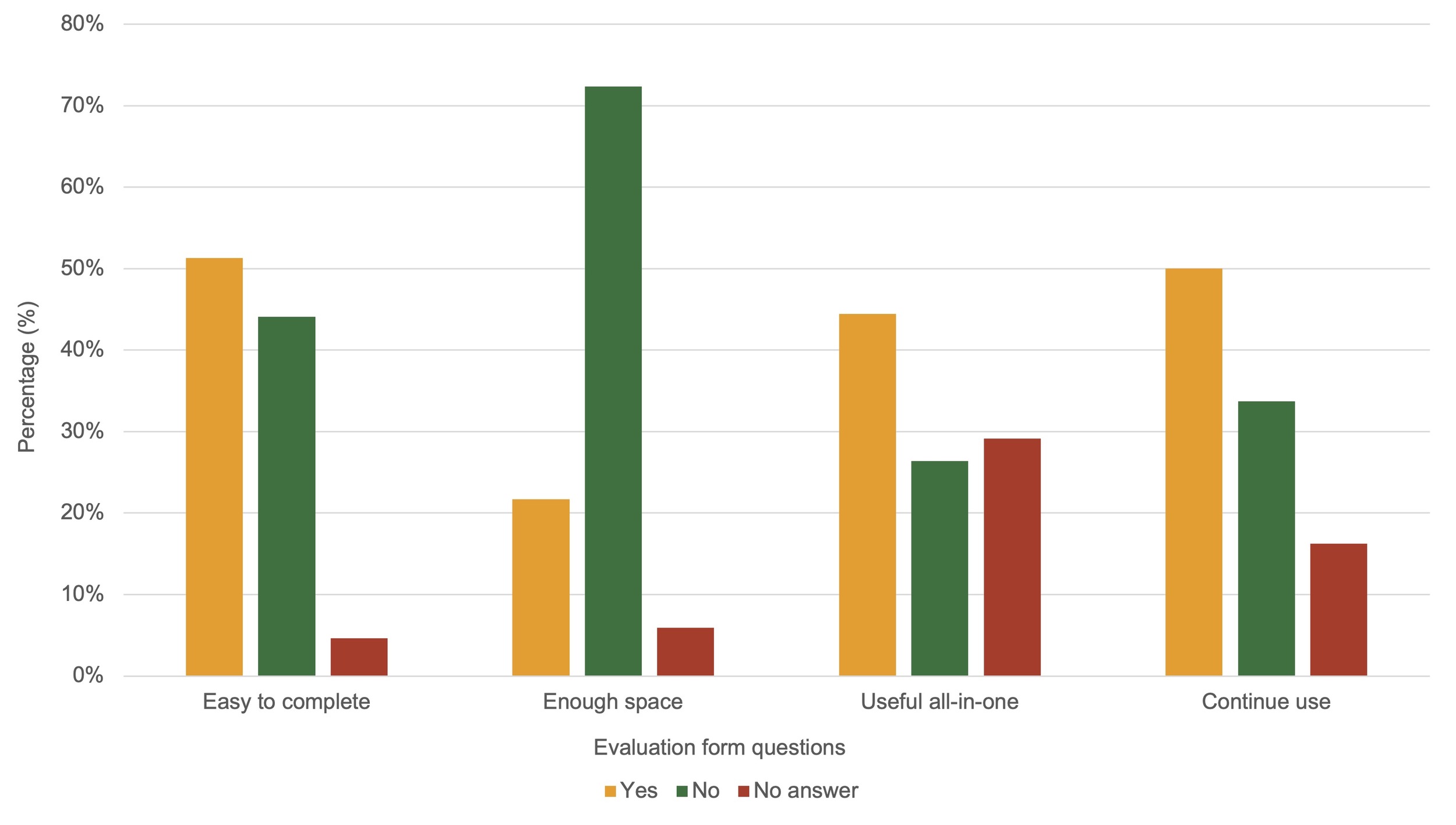
Just over half of respondents (51%) found the tools easy to complete (Figure 3), citing their comprehensive nature and usefulness as clinical guides. However, over half of the comments also described the tools as time-consuming, repetitive, or overly detailed. Additional concerns included confusion, needing multiple staff members to complete the tools, and an unfriendly layout. Space constraints were a major concern: 72% reported insufficient space for detailed clinical notes, with lifestyle counselling, medications, laboratory results, and multimorbid patient information difficult to document fully (Figure 3).
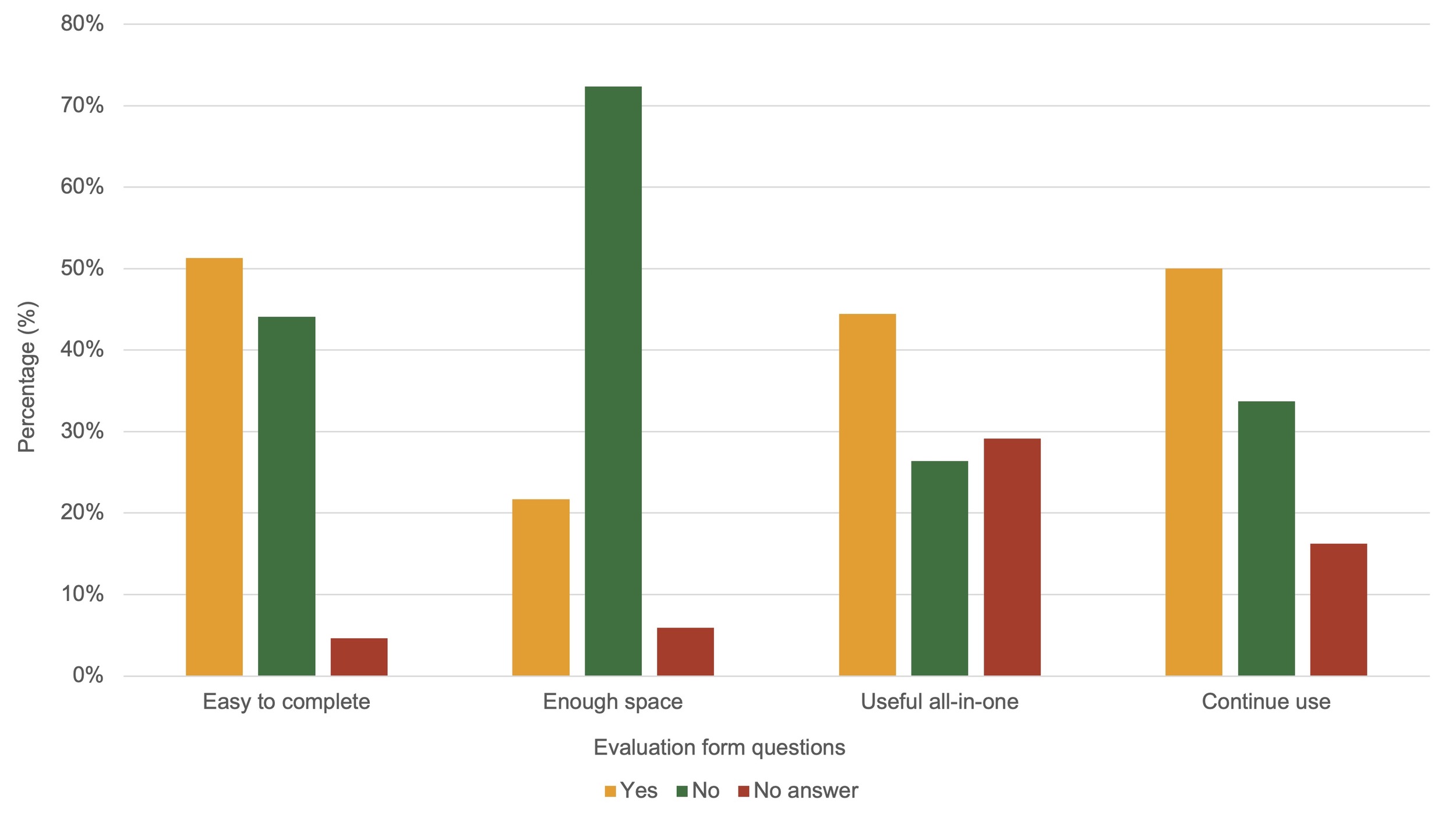
Views on usefulness were divided, with 44% finding the tools useful, 26% not, and 29% not responding (Figure 3). Positive comments highlighted support for continuity of care, improved organisation, and ease of reviewing patient progress. Negative comments related to confidentiality concerns and perceived overemphasis on certain conditions such as HIV, raising doubts about the applicability to all patient groups.
Half the respondents indicated willingness to continue using the tools, while 34% were not willing and 16% did not respond (Figure 3). Positive views noted the tools were user-friendly for follow-up visits and potentially feasible once training and corrections were completed. Negative comments cited time, insufficient space, irrelevance of some questions, and concerns about increasing patient waiting times.
Discussion
This study evaluated the pilot implementation of an integrated chronic disease clinical stationery and comprehensive screening checklist in Ekurhuleni district, highlighting both the potential value of the intervention and the operational challenges to be addressed prior to wider scale-up. The results align with national and global evidence emphasising the need for strengthened chronic disease information systems to support detection, monitoring, management, and continuity of care.8,30,31
Across interviews, evaluation forms and the record review, end users widely recognised the value of a comprehensive, integrated stationery. Participants described the intervention as reducing fragmentation, and promoting standardised documentation, directly addressing known weaknesses in South Africa’s routine chronic disease surveillance systems.18,20,21 Acceptability was reinforced by the bottom-up development approach, in which clinicians and clinic staff were actively involved in piloting, refining and shaping the tool. This involvement fostered a sense of ownership and practical relevance, which is known to influence implementation uptake.32 This approach aligns with LHS principles by using frontline experience to inform continuous improvement.25 Users also valued consolidating multiple forms, supporting more structured clinical decision-making and enhanced perceived usefulness.
Despite this positive conceptual reception, the study identified important challenges related to usability and feasibility in routine service contexts. Approximately half of all comments across evaluation forms and qualitative interviews raised concerns regarding time burden, document length and insufficient writing space. Although the time it took health workers to complete the tools was not considered in this study, it was reported that it would take a health worker about 45 to 60 minutes to complete the tools for every new patient. These challenges and the others reflect well-documented health system constraints in South Africa, including high patient volumes, staff shortages and limited consultation time.13–15,26 This highlights the tension between comprehensiveness and feasibility in documentation design, suggesting balance between clinical completeness with the realities of primary health care workflows.
The record review reinforced these concerns. While some sections demonstrated moderate completion rates, substantial portions of the main clinical record, continuation sheet and screening checklist were incomplete or incorrectly filled. These findings mirror previous evidence that routine health information systems for chronic disease in South Africa are often incomplete and inconsistently applied.18,20,21 Importantly, the findings suggest that incomplete documentation may reflect operational pressures and design complexity rather than lack of motivation alone. Sections without tick boxes or clear prompts appeared to increase cognitive load, while limited space likely contributed to abbreviated entries.
A further nuance relates to perceptions of integration. Although designed to support multimorbidity management in line with national strategies, some users perceived the tools’ integrated nature as overwhelming or insufficiently flexible. Concerns were raised regarding confidentiality and relevance for specific patient groups. These findings highlight the need for integrated tools to incorporate clear guidance on conditional completion and flexibility for different clinical pathways, particularly in high-volume settings.
Training and capacity building emerged as critical facilitators of effective implementation. Users reported difficulty and confusion with clinical scoring, investigation documentation and appropriate formats. This underscores the importance of structured training, refresher sessions and supportive supervision. Implementation science consistently shows that even well-designed tools require adequate onboarding and ongoing support to achieve sustained use.33 Given this complexity, investment in training is essential for improving data quality and consistency.
Workload pressures further shaped perceptions of feasibility, particularly during initial patient visits. As shown in previous studies, tools that increase clinical comprehensiveness may inadvertently increase consultation time unless accompanied by workflow optimisation strategies.19 While suggestions to adopt a booklet format may reduce administrative fragmentation, this alone is unlikely to fully address time pressures.
Despite these challenges, approximately half of users indicated willingness to continue using the tools, and many supported broader scale-up, contingent on refinements and training. This suggests a strong foundation for improvement. The positive perception of both tools’ purpose and potential to enhance continuity of care aligns with national priorities for integrated, patient-centred service delivery within the context of National Health Insurance and Ideal Clinic reforms.8,26
Several limitations were noted. Recall and interviewer bias, and group dynamics during focus groups, may have influenced participant responses, although multiple facilities, standardised guides, a single interviewer, and encouragement of individual reflection helped mitigate this. The patient perspective was not included in this study, as the focus was on health worker experiences. Finally, the study was conducted in one metropolitan district, which may limit generalisability; however, Ekurhuleni’s district’s size and diversity suggest findings are likely to be relevant to similar public sector primary health care settings.
Future research should explore patient experiences, evaluate clinical outcomes, and assess scale-up to other districts.
Recommendations
This study generated short- and long-term recommendations critical to strengthening the integrated chronic disease clinical stationery and screening checklist, which will support successful district and provincial scale-up. Recommendations 1 to 3 represent initial district-wide scale-up, while 4 and 5 support parallel longer-term sustainability.
-
Refine the clinical stationery booklet and screening checklist, including increasing writing space, simplifying sections, and improving layout to enhance usability, completeness and accuracy. Incorporating clearer instructions, conditional pathways and embedded clinical reference aids, may reduce cognitive burden and documentation errors.
-
Prioritise structured training and capacity building prior to wider implementation. Continued mentorship, supportive supervision, and regular frontline feedback will be important to address staff turnover, varying levels of experience and to promote continuous learning.
-
Facility-level systemic constraints require targeted attention, including addressing staff shortages, improving skill mix and managing resistance to change to create an enabling implementation environment. Workflow optimisation strategies, including task-shifting, and team-based care, should be explored to mitigate time constraints.
-
Continuous monitoring, evaluation and quality improvement mechanisms should be institutionalised through routine clinical audits, district support visits and structured feedback loops. Monitoring key indicators of completeness, accuracy and utilisation will support accountability and sustained use. Together with ongoing training, this will establish a feedback loop between frontline practice and system improvement, consistent with an LHS.25
-
Scalability and sustainability must be addressed. Each patient’s set of tools has 40 pages and is used for approximately two to four years depending on the morbidity of the patient. Each tool costs approximately ZAR 25 to print, through government printers in South Africa.34 Planning conservatively for 20 000 new chronic disease clients annually, a district budget of ZAR 500 000 would be required. In parallel, electronic or hybrid versions of the tools should be explored to support future plans.
Conclusion
This study assessed the early implementation of an integrated chronic disease stationery and screening checklist in six primary health care facilities in Ekurhuleni district. Findings demonstrate strong acceptability, with participants recognising its potential to reduce fragmentation, improve continuity of care and strengthen routine monitoring for patients with multiple chronic conditions. The bottom-up, clinician-led development process enhanced relevance, ownership and projected sustainability. However, feasibility challenges were identified, including time burden, limited writing space, design complexity, inconsistent completion and insufficient training. Overall, the study confirms the promise of integrated chronic disease documentation, while underscoring the need for refinement, training, and ongoing support and monitoring before scale-up.
Acknowledgements
We thank the multidisciplinary task team, end users and role players across the Ekurhuleni facilities for their commitment to this project.