
Introduction
Health systems continuously generate valuable knowledge through programme implementation, service delivery improvements, quality improvement initiatives, and locally developed solutions to complex operational challenges.1 However, much of this knowledge remains experiential, undocumented and largely inaccessible, limiting opportunities for sharing, learning, adaptation and scale-up.1 Such tacit knowledge is often confined to individuals, facilities, districts or specific programmes, creating isolated pockets of success in which high-performing districts or facilities thrive despite systemic constraints, while the potential to replicate effective practices remains underutilised. The World Health Organization (WHO) regards learning as vital for health system performance, but this has not translated into a shared understanding of how health systems learn in practice.2
A learning health system provides a framework for addressing this challenge3 and is characterised by the continuous generation, synthesis and application of knowledge to improve performance, creating feedback loops through which data, experience and evidence are translated into action.2 Central to this are mechanisms for knowledge sharing, collective reflection and the dissemination of effective practices across organisational and geographic boundaries. The WHO describes a good practice as an intervention, programme, process or implementation approach that has demonstrated effectiveness in a specific context, uses available resources efficiently, and has the potential to be adapted or replicated in other settings.1
South Africa’s health system faces persistent challenges related to inequities, resource constraints, disease burden and service delivery performance.4 At the same time, provinces, districts, facilities and community programmes frequently develop context-specific solutions to operational challenges.5 While some demonstrate measurable improvements, there has historically been no systematic national mechanism for identifying, assessing, documenting and disseminating such practices. Existing monitoring and evaluation systems are designed to track performance indicators rather than to capture effective practices, implementation experiences and lessons learnt,6 so valuable lessons frequently remain inaccessible to other settings that could benefit from them.
Internationally, digital best-practice portals such as the European Best Practice Portal, CHRODIS-PLUS and the Africa CDC Knowledge Management Platform have been developed to curate and disseminate practice-based knowledge.7,8 While these demonstrate the feasibility of structured knowledge curation, evidence evaluating the effectiveness of the platforms themselves remains limited, and recent reviews highlight variation in portal objectives and assessment approaches, as well as challenges of usability, maintenance, transferability and uptake.9
In response to the need for more systematic documentation and sharing of locally generated health system knowledge, a national good practices repository was developed in South Africa as an open-access mechanism for documenting and disseminating practices that demonstrate evidence of improvement in health outcomes or service delivery. This paper describes its development, outlines the methods used to identify, assess and document good practices, and reflects on the lessons learnt for strengthening organisational learning and knowledge translation within the health system.
Method
Identifying good practices
A systematic multi-source approach was used to identify and assess good practices within the South African health system through: (1) a national call for submissions; (2) provincial stakeholder engagement meetings (held in seven provinces); and (3) performance-driven identification of practices through routine health indicator analysis. Together, these were designed to capture formally and informally documented practices across multiple levels of the health system. Submissions were assessed using WHO good practice criteria,1 which have been applied across a range of public health practices7,10 and were adapted here to reflect the broader scope of the initiative, covering health system strengthening, service delivery, programme management and implementation practices.
The WHO criteria comprise nine components: effectiveness, efficiency, relevance, ethical soundness, sustainability, possibility of duplication or scalability, involvement of partnerships, community involvement, and political commitment. In this study, the three components of partnerships, community involvement, and political commitment were merged into a single stakeholder participation criterion. Equity and innovation were added to reflect South Africa’s health system priorities, which include universal health coverage, reduction of health inequities, digital transformation and health system resilience (Table 1). Equity is consistently identified as a foundational principle in health systems strengthening,10–12 and innovation as a driver of universal health coverage and resilient health systems.12–14 Innovation was understood broadly, recognising that it is not limited to technological solutions but may also involve changes in service delivery, processes or governance.
Call for submissions
A national call for submissions was issued to solicit good practices from stakeholders across South Africa’s public health sector. It was circulated by email and through social media to all provincial health departments, health district partners, non-governmental organisations (NGOs), private healthcare providers and academic institutions, and contained submission guidelines and a REDCap link for online submissions.15 Practices could also be submitted through a dedicated email address. The guidelines requested information on the practice, its context and rationale, implementation approach, evidence of effectiveness or outcomes, and challenges and lessons learnt, together with supporting documentation where available. This information formed the basis for assessment against the adapted good practice criteria.
Provincial engagement meetings
Provincial engagement meetings were conducted in seven of the country’s nine provinces: Eastern Cape, Free State, Gauteng, KwaZulu-Natal, Mpumalanga, Northern Cape and Western Cape. Although efforts were made to engage with stakeholders in Limpopo and North West, meetings could not be convened due to scheduling challenges. Participants included provincial and district health officials, programme managers and other stakeholders identified through engagement with provincial structures and leaders. The meetings were used to identify and discuss locally implemented practices and to encourage submission and documentation of practices not captured through the national call.
The meetings also oriented and supported stakeholders in identifying and writing up practices, and provided a forum for peer learning and for capturing insights and recommendations.
District indicator performance review
A data analyst reviewed service delivery and health-specific indicators reported in the District Health Information System and the District Health Barometer across all districts. The initial list was drawn from indicators commonly assessed in the Service Availability and Readiness Assessment and World Bank Service Delivery Indicators surveys,16,17 and was refined by excluding indicators with data-quality limitations, those beyond the direct control of district managers, and those for which performance was not easily quantifiable.18 The refined list of 20 indicators (Table 2) was used to assess consistent improvement across districts, defined as a sustained positive trend in indicator values over the six-year period (2018/19–2023/24), which spans pre-pandemic and post-pandemic years.
Officials in districts where indicator performance had improved consistently over the six years were contacted for virtual interviews. These were conducted with programme managers linked to the indicators, or with district managers, using a semi-structured interview guide. The interviews were intended to elicit descriptive information on the practices, strategies and management approaches that respondents perceived to have contributed to sustained improvement; they did not constitute a formal qualitative inquiry aimed at theory generation or thematic saturation. Interviews were audio-recorded with participants’ consent, and responses were summarised and reviewed alongside routine indicator trends.
Review of good practices
Submissions were reviewed and assessed by a multidisciplinary team. Each was independently assessed by two reviewers using a standardised Excel-based tool incorporating the nine criteria, with one point awarded for each criterion adequately demonstrated (recorded as ‘Yes’) on the basis of the information and supporting evidence provided, up to a maximum score of 9 (Table 3). A third reviewer resolved discrepancies and provided the final determination. Submissions from other Health Systems Trust (HST) units or departments were reviewed externally by invited public health experts independent of the organisation, to minimise the possibility of bias and any conflict of interest.
WHO recommends that a good practice should demonstrate, as a minimum, effectiveness, efficiency, relevance, and ethical soundness, together with at least one of the remaining criteria.1 In this study, sustainability was specified as that additional criterion. Acceptance therefore required all five of these core criteria to be met, giving a minimum score of 5/9. The four remaining criteria (scalability, stakeholder participation, equity, and innovation) did not determine acceptance, but contributed to the total score and informed the selection of practices for dissemination.
Repository establishment and dissemination
Accepted practices scoring 9/9, together with those identified through the performance-driven route, were documented using a standardised template and uploaded to the good practices repository. Five were selected for professional video documentation in the repository, to capture implementation experiences, success factors and lessons learnt in a format accessible to a wide range of stakeholders. Selection was by consensus of the review and project team, based on novelty, relevance to current health priorities, and the submitting organisation’s willingness to have its practice featured.
The repository was developed as an open-access online platform to facilitate ongoing submission, review, dissemination and adaptation of good practices. It was established on Scholastica (Chicago, USA), a web-based digital publishing platform supporting the hosting of openly accessible articles, and was configured to present good practice profiles in a structured interface that allows users to browse by category and theme. Standardised information from assessed practices was curated and uploaded to the platform, which was designed to support continued submission and updating of practices beyond the initial study period.
A comprehensive report was also developed, capturing the implementation process, descriptions of the accepted practices and the lessons emerging from the initiative.
Ethical considerations
Ethical approval was received from the Pharma-Ethics Committee (Ref. 240726590). Authorisation to conduct the study was granted by the National Department of Health, and the relevant provincial health research ethics committees via the National Health Research Database across all provinces. Written informed consent was obtained from all participants.
Results
Overview of submissions
A total of 71 submissions were received. Submissions came from academic institutions (4, 5.6%), NGOs (12, 16.9%), non-profit organisations (2, 2.8%), private stakeholders (1, 1.4%) and provincial governments or district health services (52, 73.2%). Of these, 58 met all five core criteria and were accepted as good practices. The remaining 13 did not meet one or more of the core criteria and were not accepted.
Thematic coverage
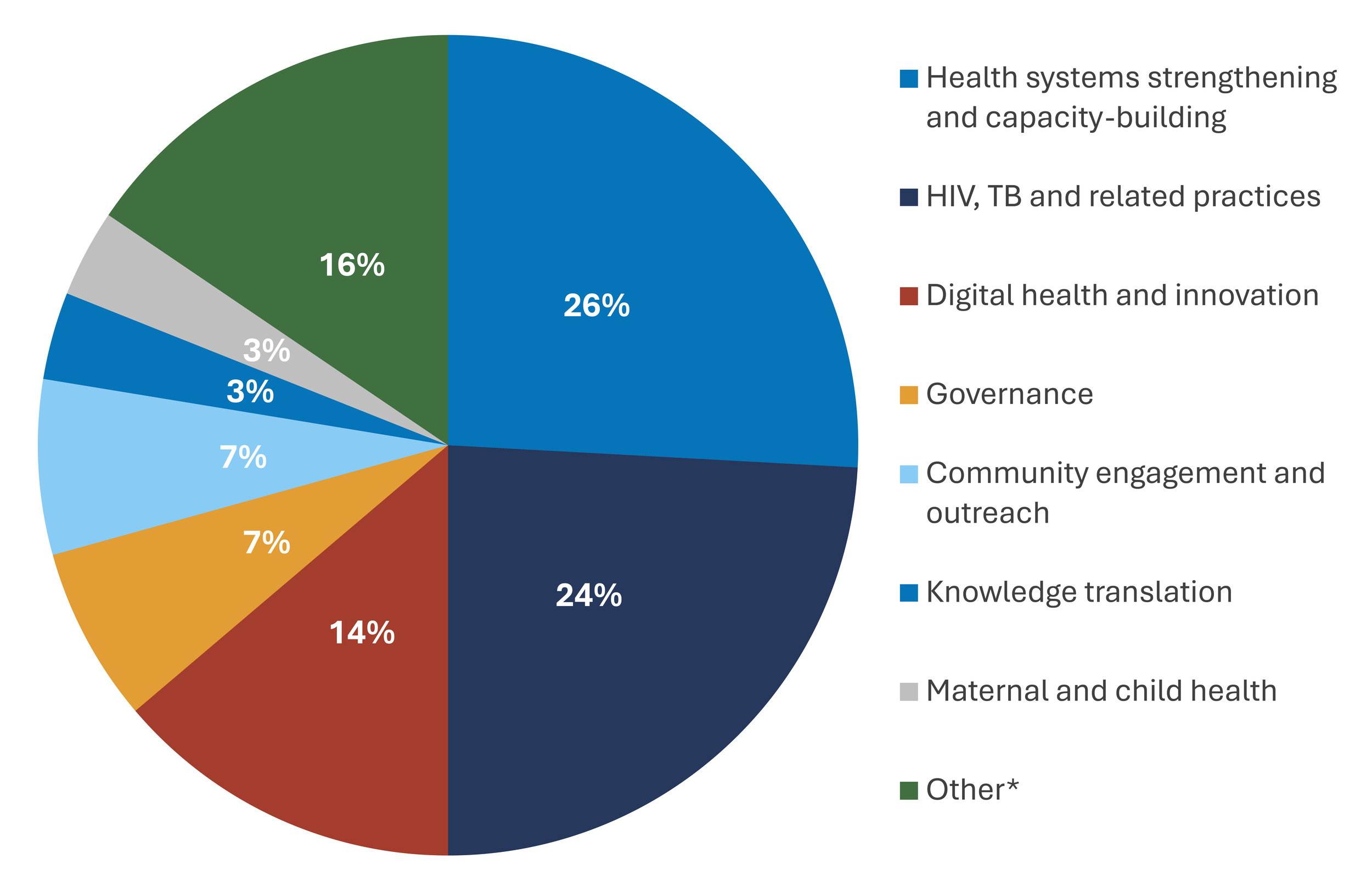
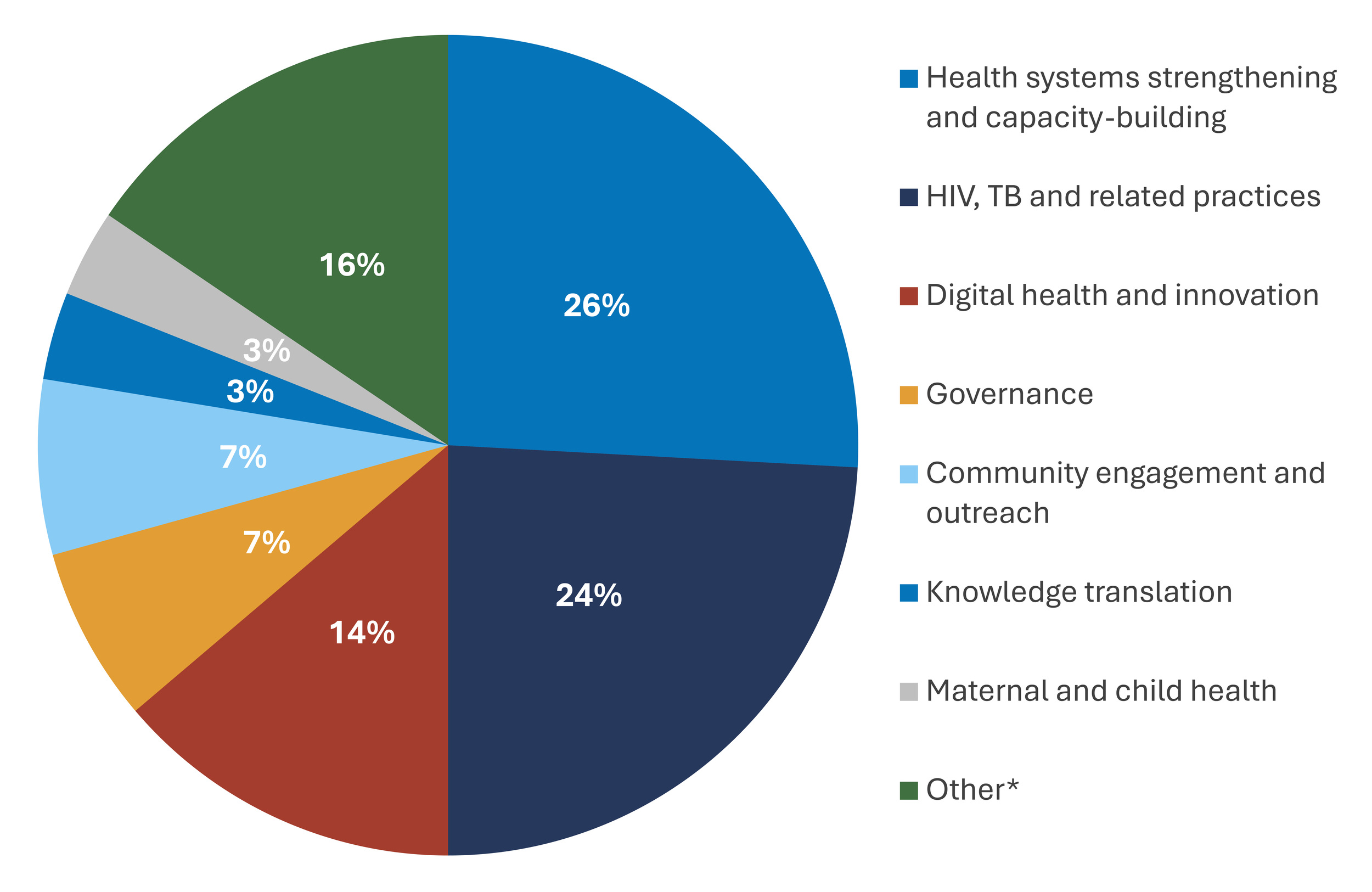
Accepted good practices were categorised into health themes developed inductively from the content and focus of the submissions rather than applied from a predefined framework. The themes covering the most practices were health systems strengthening and capacity-building (n = 15); HIV, TB and related practices (n = 14); digital health and innovation (n = 8); governance (n = 4); and community engagement and outreach (n = 4), reflecting a strong focus on service delivery and disease response (Figure 1). Where submissions fell into more than one category, each was assigned to the category that most strongly reflected its primary objective and principal area of impact.
Of the 58 accepted good practices, 16 (28%) achieved the maximum score of 9/9 and were selected for the inaugural release of the repository (Table 4). These provided sufficient information across all assessment domains on implementation, effectiveness and potential for replication; prioritising the most comprehensively documented practices ensured that the platform launched with complete case studies demonstrating its functionality and intended use. Other accepted practices requiring further documentation or refinement were retained for incorporation after the launch.
District indicator performance review
Of the 20 indicators assessed, eight showed consistent improvement in one or more districts over the six-year period (2018/19–2023/24). Apart from ‘clients remaining on ART’ and ‘pharmacists per 100 000’, each of these indicators improved in more than one district (Table 5).
Districts were contacted for interviews on the practices behind these improvements, and 17 virtual interviews were conducted across 11 districts. Responses varied: some respondents described specific practices associated with improved performance, while others attributed improvement to strengthened data quality and reporting processes. In Zululand, the improvement in the ART effective coverage indicator corresponded with the community-based DO ART practice submitted through provincial engagements, which describes comprehensive community-based HIV services in eThekwini and Zululand (Table 4). Respondents in Zululand described case-finding activities consistent with the DO ART practice, alongside targeted tracing campaigns, weekly facility-level reporting of outstanding cases, and regular review meetings.
Although respondents across districts could generally describe the key activities and management approaches involved, most had not formally documented these as good practices or retained the supporting evidence required for assessment against the adapted WHO criteria, and the approaches could therefore not be formally validated. These approaches were instead synthesised into summaries and included in the repository as examples of practices associated with sustained improvement in routine health indicators.
Discussion
Development of a national good practices repository
The good practices repository represents an important advance in South Africa’s capacity for a learning health system, systematically capturing implementation knowledge generated through routine service delivery. It marks a shift from static, report-based documentation towards a living digital platform through which good practices can be continuously submitted, reviewed, updated and shared. To the authors’ knowledge, it is the first national health sector repository of its kind in South Africa dedicated to documenting and disseminating validated good practices across multiple programme areas.
The structured criteria provided a transparent basis for assessment. Practices that did not achieve full scoring mostly fell short because of limitations in how they were documented rather than because they were ineffective or lacked impact: many demonstrated local value and innovation but lacked comprehensive descriptions of processes, outcomes or sustainability. This highlights the importance of building capacity in documentation, monitoring and evaluation to enable the scale-up of worthy practices.
A distinctive feature of this initiative was the use of routine health information to identify districts demonstrating sustained performance improvement, and then to explore the practices underpinning these gains. This shifted the focus from descriptive performance monitoring towards inquiry into the actions and contextual factors behind improved outcomes, and created a feedback loop in which quantitative data prompted reflective dialogue among district and programme managers, consistent with learning health system principles that align data and culture with continuous improvement.19 Improvement was attributed to different pathways, with some districts reporting targeted service delivery practices and others identifying strengthened reporting and data verification. Routine indicators alone cannot establish attribution, and observed improvements may also reflect changes in reporting completeness, data quality or context; indicator trend analysis is therefore best viewed as a screening mechanism for identifying settings for further inquiry rather than as evidence that a specific practice caused improved performance.
Notably, indicator improvements were rarely attributable to individual practices. Gains were more often associated with strengthened supervision, improved use of routine data in review meetings, stakeholder collaboration, better co-ordination across service delivery levels, and context-specific leadership actions. Routine governance structures such as monthly reviews, Nerve Centre meetings, Operation Phuthuma and district oversight platforms functioned as mechanisms of adaptive management, suggesting that governance practices that enable continuous adaptation and optimisation of existing systems may yield sustainable performance improvement. Because indicator analysis was conducted independently of the practice submissions, and interviews were guided by observed performance trends, the correspondence between the documented community-based HIV practice and improvement in the routine ART effective coverage indicator in Zululand district represents convergence across independent data sources. This convergence should not, however, be interpreted as evidence of causation. Respondents attributed the observed improvement to multiple concurrent strategies, including community-based case-finding, while the indicator itself likely reflects broader HIV programme performance rather than the effect of any single practice. The value of combining these data sources therefore lies in identifying settings where practices and measured performance converge and not in validating individual practices.
Emergent themes
Three cross-cutting themes emerged: innovation redefined as context-responsive and organisational rather than purely technological; the deliberate integration of practices into existing service delivery platforms; and multisectoral collaboration and leadership as strategic drivers of good practice.
Innovation
In resource-constrained health systems, innovation may be reframed as the ability to generate improved outcomes through efficient use of existing resources rather than through the introduction of new technologies or costly practices. Such frugal or adaptive innovation may take the form of organisational redesign, strengthened governance, task re-allocation, community-service integration or improved use of data,20 recasting resource constraints as opportunities for improvement rather than as barriers to it.
Integration of practices into health services
The WHO good practice criteria emphasise demonstrable effectiveness with minimal use of resources, and sustainability beyond initial implementation.1 Where budgets and human resources are constrained, integrating practices within established service delivery and governance structures is critical to optimising existing resources. Most of the documented practices were deliberately integrated into routine clinical workflows and district management structures rather than operating in parallel. Initiatives embedded in routine service delivery are more likely to be adopted as standard operating procedure, whereas stand-alone initiatives remain vulnerable to funding cuts and shifts in priority.21
Multisectoral collaboration
Multisectoral collaboration emerged as a defining strategic driver across many of the documented practices. It brought together diverse expertise, resources and ideas, strengthened capacity, and thereby enhanced the relevance, scalability and sustainability of practices. Leadership and governance were also evident in several practices, through institutional support, coordination and oversight that facilitated adoption. For example, practices such as the Xhariep One Health response demonstrated cross-sectoral coordination, while the eThekwini / Zululand HIV programme demonstrated institutional support for community-based service delivery (see links in Table 4).
Global context
The repository reflects growing international recognition of the need for mechanisms that support health system learning and knowledge translation,22–25 and the WHO’s promotion of documenting and disseminating good practices as a strategy for accelerating health system improvement.1 International examples show that repositories can increase the visibility of locally generated knowledge, but also that establishing a platform does not in itself ensure use, adaptation or scale-up.9 Documented practices need to be actively accessed, discussed, critically appraised and adapted to different contexts.
Future developments
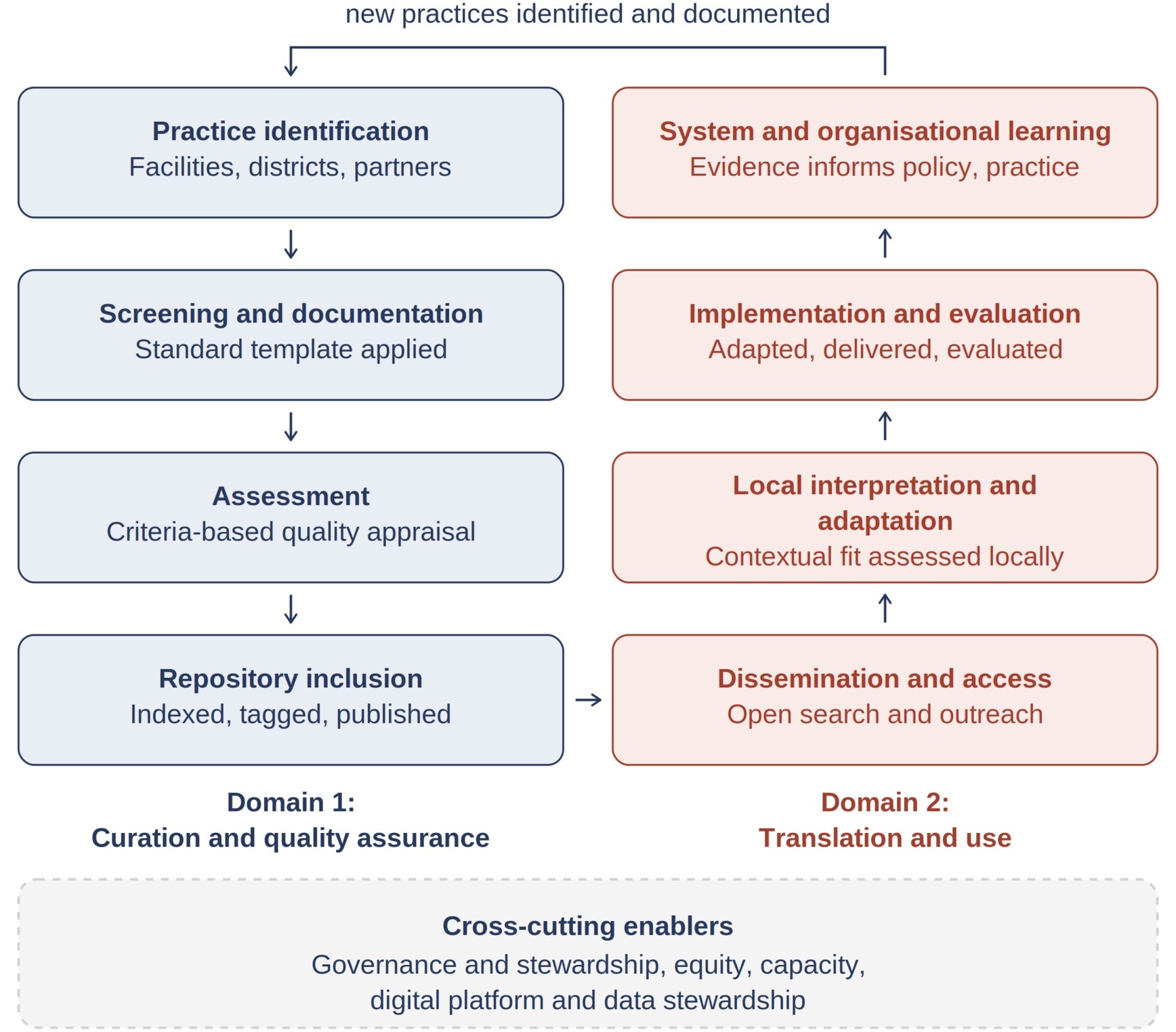
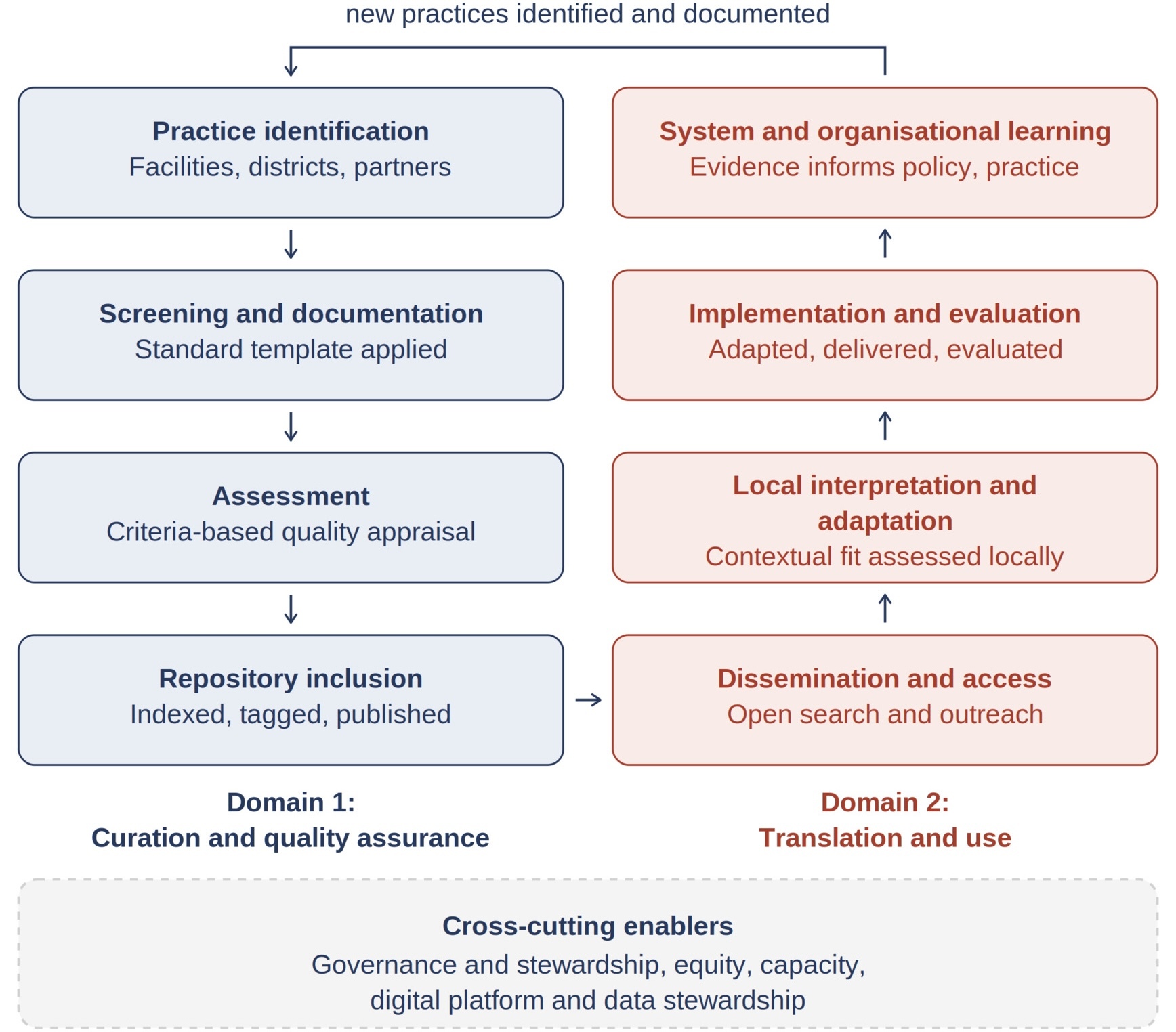
The initiative has established the infrastructure and knowledge base needed to support translation and use, but mechanisms for tracking repository use, facilitating peer learning, supporting adaptation and assessing uptake remain to be developed (Figure 2). Future phases will focus on monitoring use and user engagement, developing communities of practice around priority themes, providing practical guidance for adapting documented practices to local contexts, and integrating repository learning into routine health system planning, so that the repository moves beyond information dissemination towards supporting the translation and application of documented practices.
Sustainability and ongoing maintenance
Long-term sustainability will depend on maintaining the repository as a dynamic knowledge resource rather than a once-off project output. HST will provide ongoing stewardship, including platform maintenance, co-ordination of submissions and oversight of content quality. A dedicated review team will assess new submissions against the good practice criteria, support further documentation where required, and periodically review existing entries for continued relevance. Calls for submissions will be issued on a rolling basis, enabling the repository to respond to emerging health system priorities and to capture practices that mature after the initial project period.
Limitations of the study
The identification of good practices relied on voluntary, self-reported submissions that were not verified at facility level, so the information available depended on the quality and completeness of what was submitted, introducing selection bias. Limited documentation capacity may compound this, since settings with greater capacity to document their work are more likely to be identified. The practices described should therefore not be read as a representative sample: both the provincial distribution and the thematic profile of submissions reflect who was able to respond as much as where effective practices exist. The district indicator review partly offsets this bias and did surface practices that had not been submitted, but it depends in turn on indicators being well reported.
Indicator trends cannot be attributed to good practice alone. National policies, socio-economic dynamics, pandemic-related adaptations, and broader health system factors may all have contributed to the trends observed between 2018/19 and 2023/24.
The analysis involved neither facility-level verification nor longitudinal evaluation, which limits assessment of sustainability and long-term outcomes. Stakeholder co-production was also limited: stakeholders contributed practices and participated in engagement meetings but were not systematically involved in the design of the repository. Future refinement will incorporate structured stakeholder and user feedback on the relevance, content and functionality of the platform.
Recommendations
For practice
Many submissions showed potential as good practices but lacked sufficient information or supporting evidence to be assessed against the criteria. Practical support and simple tools are therefore needed to help health system stakeholders document their implementation experience and achievements; the repository’s submission platform now includes guidance on writing up and submitting practices.
Routine data identified improvements that voluntary submission did not surface. Eight of the 20 indicators showed sustained improvement, and practices potentially relevant to most of these indicators had not been submitted by the provinces concerned or formally documented.
South Africa’s decentralised health system gives provinces substantial responsibility for planning and implementing health services, with consequent variation in priorities and implementation approaches. Participation in this initiative also varied across provinces. Although these observations are not conclusive, they highlight the need for provincial leaders to support stronger cross-provincial knowledge sharing and documentation.
Further research
Further research is warranted in four areas: (1) evaluation of repository utilisation and reach, including who accesses documented practices and for what purpose; (2) the determinants of adoption and adaptation, including why documented practices are, or are not, taken up in new settings and what modifications are made; (3) whether use of the repository is associated with measurable change in service delivery; and (4) the barriers to cross-provincial learning, which this study could observe only indirectly. A more detailed analysis of patterns in assessment scores and documentation will also become feasible as the repository matures and a larger body of submissions accumulates.
Conclusion
Systematic identification and documentation of good practices, supported by a national repository, may provide an enabling foundation for knowledge sharing, adaptation and health system learning, although these downstream effects require further evaluation. Mechanisms that facilitate knowledge sharing and organisational learning will become increasingly important as South Africa pursues health system reform and strengthens service delivery under the National Health Insurance Act.
Abbreviations
Acknowledgements
The authors gratefully acknowledge the support of the National Department of Health. We sincerely thank all individuals and organisations who submitted good practice entries and generously shared their experiences and implementation lessons.
Conflict of interest
The authors declare that they have no competing interests. The study was supported by the National Department of Health, which had no role in the study design, data collection, analysis or interpretation.