
Introduction
Learning, training, and skills development are essential for equipping healthcare workers with the knowledge and competencies required to deliver safe, effective, and high-quality care.1 Digital platforms are increasingly being used to expand access to flexible training and mentorship opportunities, particularly in underserved settings, enabling ongoing learning and workforce development.2 By strengthening healthcare worker capacity and supporting decentralised service delivery, these innovative approaches contribute to health system strengthening and improved health outcomes.3
Access to antenatal ultrasound in South Africa
Antenatal ultrasound is an essential component of quality antenatal care (ANC), supporting the early identification and referral of pregnancy-related complications while improving maternal experiences and clinical decision-making.4,5 Accurate risk stratification ensures that pregnant women receive care at the appropriate level, improves pregnancy outcomes, and reduces unnecessary referrals, thereby increasing patient satisfaction.6–8 In Uganda, the use of limited obstetric ultrasound has enabled the identification of high-risk obstetric conditions and altered clinical diagnosis in up to 12% of screened patients.9
In recent years, access to antenatal ultrasound has increased in low- and middle-income countries (LMICs), with a growing number of midwives receiving training and performing limited ultrasound examinations.10,11 As the primary providers of ANC in South Africa, midwives are ideally positioned to increase access to antenatal ultrasound care at primary health care (PHC) level, where the majority of pregnant women attend ANC. Strategies to enhance new skills development in health care are urgently needed.
The importance of mentorship in health training
Mentorship following training plays a critical role in reinforcing, refining, and sustaining newly acquired clinical skills, supporting their effective application in demanding healthcare environments.12–14 Evidence from sub-Saharan Africa demonstrates that post-training mentorship improves knowledge retention, clinical competence, and confidence among healthcare workers at PHC level.14 Furthermore, mentorship creates communities of practice, enabling peer learning and collective problem-solving that strengthen the professional identity of participants and their engagement with continuing professional development.15 A systematic review of mentorship programmes for healthcare workers in Africa concluded that mentorship was associated with meaningful improvements in both individual competence and institutional performance, with the strongest effects observed where mentorship was structured, regular, and linked to case-based learning.13 Furthermore, studies in nursing and midwifery have shown that formal, structured mentorship programmes produce consistent benefits, including enhanced clinical skills, confidence and satisfaction among mentees, as well as leadership development and professional fulfilment for mentors, while positively impacting organisational efficiency and patient outcomes.1
Virtual platforms as a supporting modality for learning
The use of virtual mentorship platforms has grown substantially in health care since the COVID-19 pandemic, which accelerated the adoption of remote professional development and learning tools across clinical disciplines.16,17 These platforms offer several advantages over traditional face-to-face training, including reduced travel costs, greater accessibility, opportunities for asynchronous learning, and improved access to specialist expertise in resource-limited settings.17,18 In South Africa, where geographical barriers can limit access to training and specialist support, particularly in rural and underserved areas, virtual learning and mentorship platforms offer a practical and scalable approach to strengthening healthcare worker capacity and supporting quality healthcare service delivery.19
However, the effectiveness of these platforms depends on reliable internet connectivity. Healthcare workers, particularly those in rural and underserved areas, often face connectivity challenges, including limited coverage, high data costs, and reliance on personal mobile data usage.19 These factors can affect participation in virtual programmes, especially those requiring stable connections for live sessions or access to online resources.
Impact of digital literacy on virtual mentorship learning
Digital literacy is defined as the ability to effectively use technology and the internet to find, evaluate, create, and communicate information, and is a critical determinant of meaningful engagement with virtual mentorship and e-learning platforms.18 Without adequate digital competency, health workers face significant barriers to participation, including difficulty in navigating platforms, limited ability to engage with learning content, and reduced confidence in online environments.20 The literature consistently identifies digital literacy as a strong predictor of e-learning engagement, with lower literacy levels linked to reduced participation, diminished satisfaction, and higher dropout rates.21,22 The World Health Organization recognises digital education and digital health literacy as key enablers of health workforce development.20,21 Therefore, investing in digital literacy training alongside virtual mentorship is essential to ensure equitable access, enhance learning outcomes, and support effective healthcare workforce development.
Digital learning platforms and structured mentorship have the potential to transform healthcare workforce development by expanding access to flexible, high-quality training and supporting decentralised service delivery in underserved settings. However, evidence of their feasibility in the South African context remains limited. Understanding the factors that influence their adoption, including barriers related to digital literacy, connectivity, and implementation, is essential to inform health system strengthening and improve patient outcomes.
Method
Study context, aims and objectives
The Siyakubona project sought to strengthen health system capacity by upskilling midwives in antenatal ultrasound and providing ongoing virtual mentorship to support the integration, retention, and sustained application of the newly acquired skills in PHC settings. This study evaluated the feasibility and acceptability of, and digital engagement with this mentorship model and explored its role in supporting midwives’ clinical practice following antenatal ultrasound training.
A total of 541 midwives and advanced midwives from six South African provinces (Eastern Cape, Free State, Gauteng, KwaZulu-Natal, Mpumalanga, and Western Cape) were trained by the Global Ultrasound Institute to perform a limited focused (level 1 basic) antenatal ultrasound through a combination of theoretical and practical instruction between April 2024 and April 2025 using point-of-care ultrasound (POCUS). Ultrasound training covered the assessment of intra- and extrauterine pregnancies, gestational dating using crown–rump length and head circumference, foetal heart rate, amniotic fluid volume, placental location, foetal presentation, and detection of multiple pregnancies. Competency was assessed through theoretical and practical examinations, and certificates were awarded upon successful completion of the training.
Post-training mentorship was delivered through the Extension for Community Healthcare Outcomes (iECHO) project, a structured, expert-led virtual platform that connects healthcare workers with experts through live, Zoom-based learning and mentorship sessions. Participants register on the platform, enrol in programmes, and receive automated scheduling notifications and session reminders. The iECHO platform also provides access to learning materials, including presentations, session recordings, guidelines, and other educational resources, supporting both real-time and self-directed learning.2
The iECHO platform facilitated structured, scheduled online sessions comprising expert-led didactic presentations delivered by advanced midwives and specialist clinicians from participating provinces, together with case presentations by trained midwives who had completed the POCUS training and were implementing the technology in their facilities. These sessions addressed commonly encountered medical conditions, clinical challenges, case reviews, and ultrasound image quality, while promoting collaborative learning to enhance midwives’ diagnostic and clinical management skills. Key topics included: pregnancy dating, multiple pregnancies, low-lying placenta (placenta previa), amniotic fluid abnormalities (polyhydramnios and oligohydramnios), and foetal cardiac abnormalities, including bradycardia and tachycardia. Every session was recorded, and all learning materials were archived on the platform, allowing participants to revisit the content for ongoing, asynchronous professional development and learning.
Midwives who attended the online sessions were invited to complete a survey to share their perceptions and experiences with the virtual mentorship platform, including accessibility, ease of use, usefulness of the sessions, relevance of the topics covered, and overall structure of the meetings.
Ethics and consent
Ethical approval was obtained from the Faculty of Health Sciences Ethics Research Committee of the University of Pretoria (reference no. 132/2023). Participation in both the virtual mentorship sessions and the survey was voluntary; all survey participants provided informed consent.
Statistical analysis
Data were described using frequencies and proportions for categorical variables and the Pearson chi-square test was used to test for differences. Statistical significance was set at the level of 5%.
Results
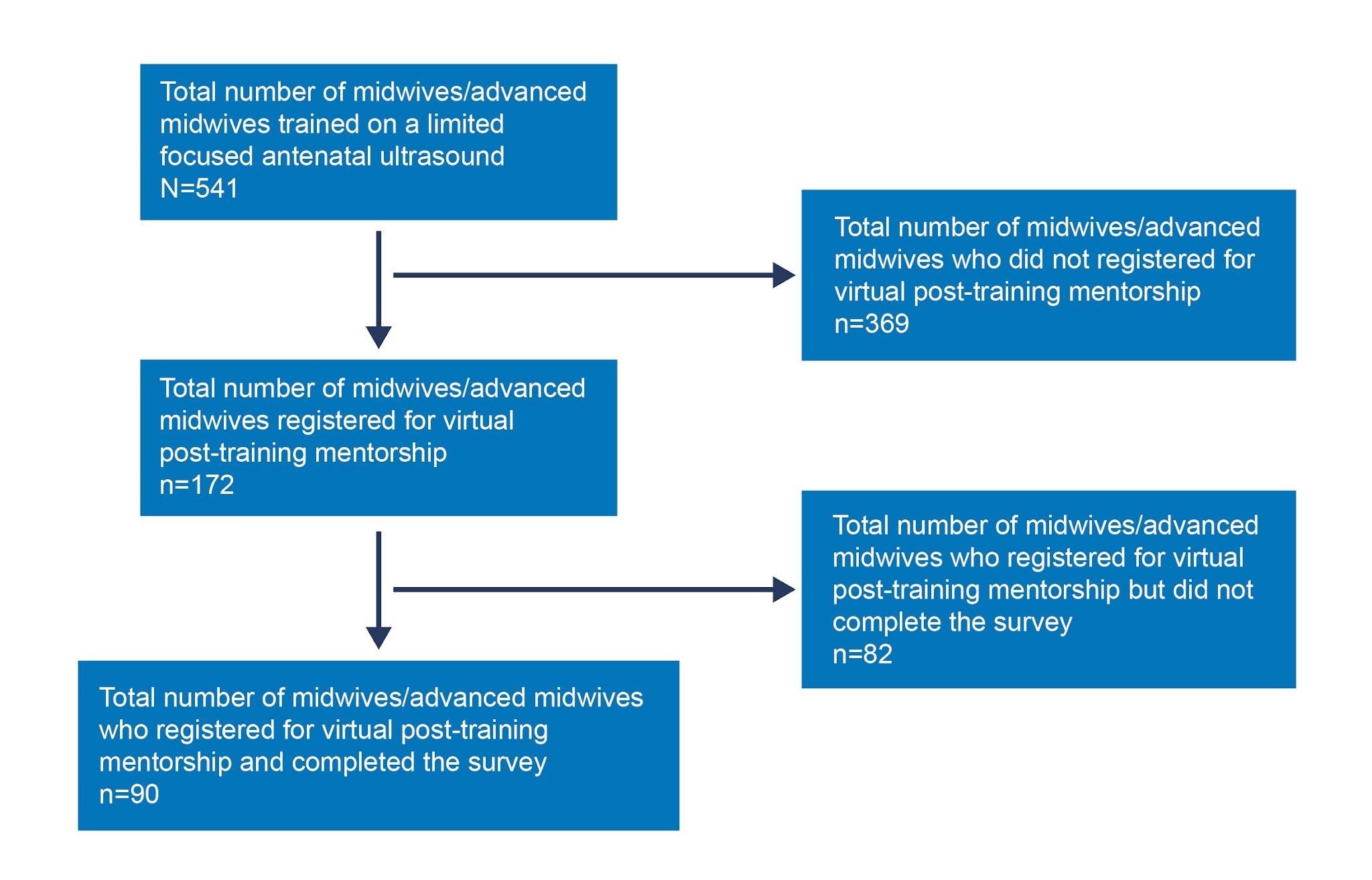
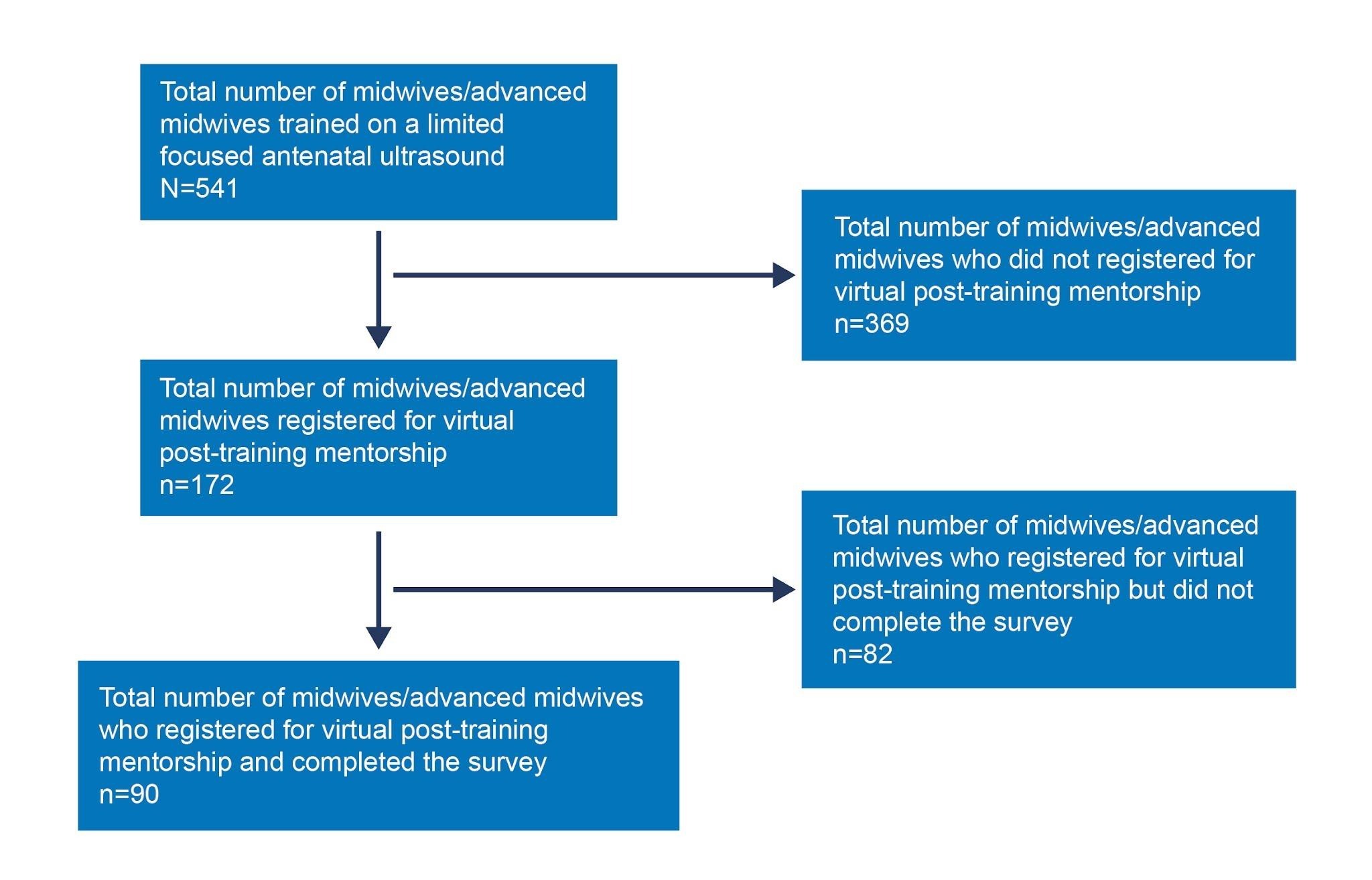
In total, 27 sessions were held virtually over a 12-month period on the iECHO platform, including 20 midwife-led case presentations. A total of 172 midwives registered on the iECHO platform and attended at least one session, with an average of three sessions per midwife. Among the attendees, 90 (52.3%) participated in the survey (Figure 1).
Internet access and digital literacy
Among the midwives who completed the survey, 67.8% reported daily access to the internet, and the remaining 32.2% had weekly access (1–6 days/week) (Table 1). In terms of digital literacy, over 90% (n = 83) of participants reported using emails for sending and receiving messages, being comfortable browsing the internet and using search engines, and being able to use video conferencing platforms such as Zoom or Microsoft Teams. In addition, 72.2% (n = 65) of the respondents knew how to install and uninstall software.
User engagement with the iECHO platform
As shown in Table 2, 44 (48.9%) participants reported previous attendance of the mentoring sessions provided on the iECHO platform; among these, 43 (97.8%) indicated that the information provided was relevant to their work.
Feasibility and acceptability of the iECHO platform
Among the 90 survey respondents, 55.6% (n = 50) reported easy registration on the iECHO platform. Seventy-three participants accessed learning material, nearly half of which, 49.3% (n = 36), reported that access was easy. Most participants who previously attended the meetings, 89.7% (n = 35), rated their experience as good. Overall, 91.1% (n = 82) indicated that they were likely to recommend the iECHO platform to a colleague, and 28.9% (n = 26) identified areas in the mentorship sessions that could be improved (Table 3).
Areas for improvement in the mentorship sessions
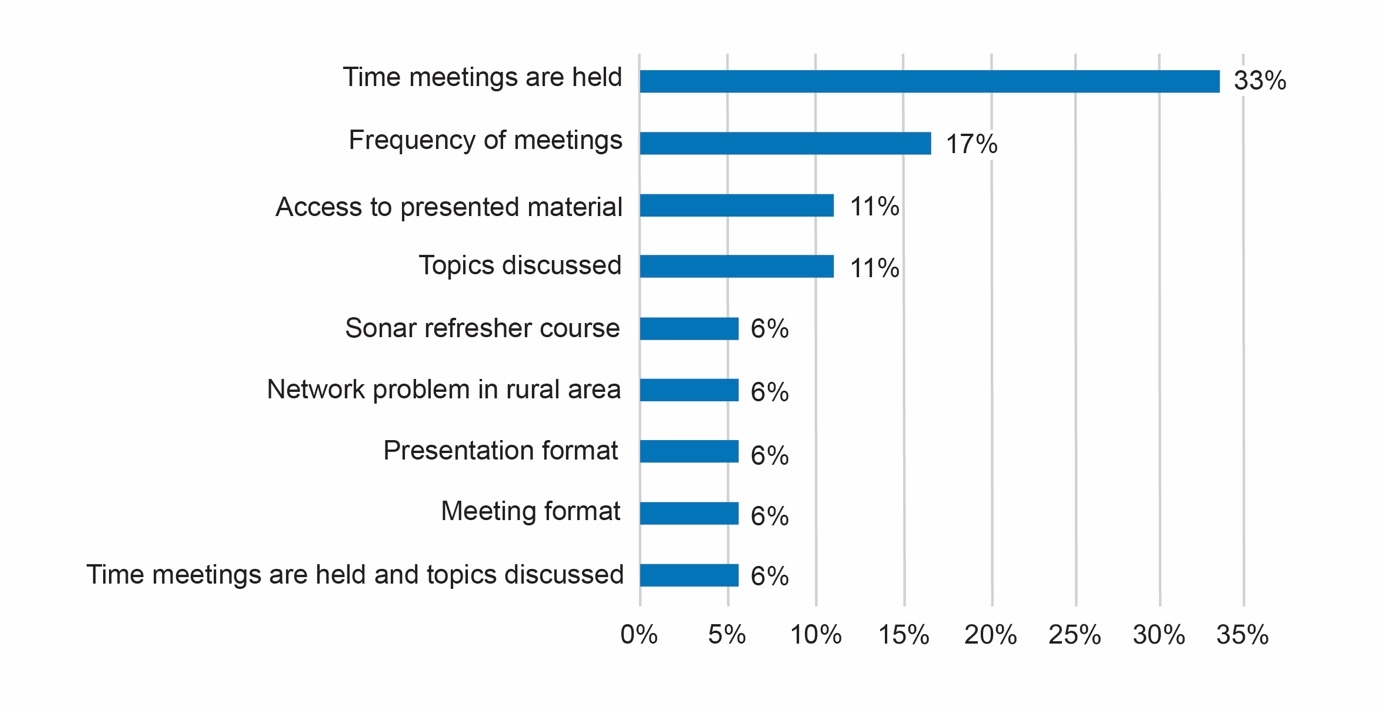
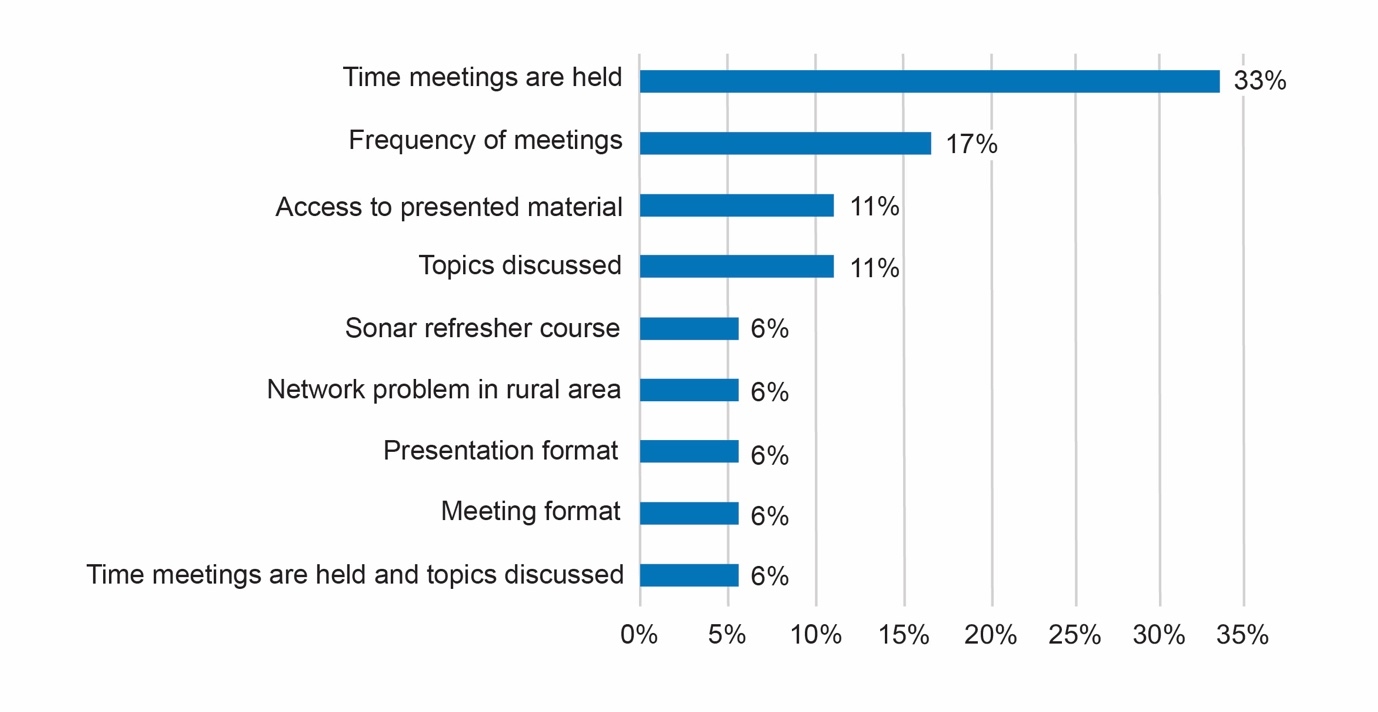
Of the 26 midwives who indicated that there could be areas for improvement in the mentorship sessions, 18 provided suggestions (Figure 2). The most commonly identified area was meeting times (33%, n = 6), followed by frequency of meetings (17%; n = 3). Access to presented material and discussion topics were each identified by 11% (n = 2) of the respondents. Other areas included network problems in rural areas, the need for a sonar refresher course, the presentation format, meeting format, and both meeting times and discussion topics.
Impact of internet access on iECHO feasibility and acceptability
Participants with daily internet access were significantly more likely to report that registration on the iECHO platform was easy than those with only weekly internet access (65.6% vs 34.5%, p = 0.021) (Table 4). Similarly, a greater proportion of participants with daily internet access reported ease of accessing learning materials (n = 29) compared to those with weekly access (47.5% vs 24.2% p = 0.110), although this difference was not statistically significant.
Discussion
This study evaluated the feasibility and acceptability of a virtual mentorship platform among midwives who had completed limited obstetric ultrasound training as part of the Siyakubona project in South Africa. The findings indicate that structured virtual mentorship is a feasible and acceptable strategy for supporting midwives, and are consistent with previous evidence demonstrating the effectiveness of models such as Project ECHO in strengthening health workforce capacity.1,12,23
A high level of digital literacy was observed among the study participants, with over 92% reporting proficiency in email communication, internet browsing, and video conferencing tools. This finding is encouraging given that digital literacy is a key determinant of successful engagement with virtual learning and mentorship platforms.20 Previous studies have linked limited digital skills to lower participation, reduced satisfaction, and increased attrition in e-learning programmes.24,25 Furthermore, this study identified significant disparities in internet access, with approximately one-third of participants reporting access only on a weekly basis. This finding is particularly relevant in the South African context, where geographic barriers, high data costs, and infrastructure limitations disproportionately affect healthcare workers in rural and underserved areas, underscoring the importance of strengthening digital infrastructure and improving data access as prerequisites for the successful implementation of technology-based health system strengthening interventions.
The average attendance of three sessions per midwife, while modest, is consistent with participation patterns reported in similar ECHO-based programmes in LMIC settings, where competing clinical demands and connectivity challenges often limit regular attendance.26
Notably, among those who had attended prior sessions, 97.8% found the information relevant, which is a strong indicator of content validity and perceived utility. This high relevance rating is consistent with the programme’s design, which incorporated clinically contextualised topics, including pregnancy dating, placental abnormalities, amniotic fluid assessment, foetal cardiac anomalies, and ultrasound image quality review, all of which are directly applicable to the midwives’ scope of practice in ANC.11
More than half of the study participants found registration on the iECHO platform easy, and the majority (91.1%) indicated that they would recommend the iECHO sessions to a colleague. These findings highlight the acceptability and user satisfaction associated with the iECHO model as a virtual mentoring platform and are consistent with reports from diverse geographic and clinical settings where high levels of participant satisfaction have been observed.23,27
The integration of virtual mentorship into post-training support represents a scalable and cost-effective strategy for health system strengthening in South Africa. Platforms such as iECHO have the capacity to transcend geographic boundaries by connecting healthcare workers across provinces and regions, facilitating access to specialist clinicians and advanced midwifery expertise, and fostering communities of practice that extend beyond individual training events. This enables ongoing mentorship, supports the sustained application of newly acquired skills in clinical settings, and promotes professional collaboration and peer learning among participants.
The Siyakubona project exemplifies this approach by supporting ultrasound services and building the capacity of midwives to perform limited obstetric ultrasound at PHC level, directly addressing critical gaps in ANC quality and access. These findings are particularly relevant to South Africa’s goal of strengthening PHC and ensuring equitable access to healthcare services under the National Health Insurance framework.28 Virtual mentorship platforms are thus well-positioned to serve as an enabler of this national vision, offering a sustainable, technology-driven mechanism for continuous workforce development and improved service delivery at PHC level where the majority of pregnant women attend ANC.
Limitations
All midwives were invited to register and participate on the iECHO platform using email and WhatsApp, followed by reminder notifications sent one week, one day, and 45 minutes ahead of the scheduled meetings. However, less than half of the trained midwives participated in the online sessions. This level of participation may be attributable to factors such as limited internet access, varying levels of digital literacy, or competing clinical and workloads demands. Furthermore, while most survey participants had access to the internet, the results may be biased, as midwives who could not participate in the virtual sessions may have had internet connectivity challenges.
Recommendations
Internet access seems to play a vital role in digital literacy and ease of use of virtual platforms. Efforts should be made to ensure there is reliable internet connectivity at PHC facilities, including the provision of Wi-Fi services, to promote equitable access. Managers should consider allocating protected time for midwives’ virtual mentorship online sessions to afford more midwives an opportunity to attend the sessions.
Strategies such as embedding platform onboarding within initial training, adopting a blended synchronous and asynchronous learning model, pursuing continuous professional development (CPD) accreditation from professional bodies for the mentorship sessions, establishing a train-the-trainer mentorship model, and conducting longitudinal competency follow-up could improve attendance. Overall, the positive findings of the study suggest the potential of virtual platforms such as iECHO to be integrated into antenatal ultrasound training programmes to support skill retention and long-term sustainability.
Conclusion
This study demonstrates that a structured virtual mentorship programme delivered through the iECHO platform following focused antenatal ultrasound training for midwives is feasible and acceptable within PHC settings. Adequate internet access and digital literacy facilitated seamless engagement with the platform, as reflected in the high satisfaction scores and participants’ strong willingness to recommend it. While barriers such as inconsistent connectivity and competing workloads persist, virtual mentorship offers a scalable and sustainable approach supporting post-training skill retention and remote clinical learning, particularly in resource-constrained health systems.
Acknowledgements
We express our sincere appreciation to the 541 midwives who underwent limited antenatal ultrasound training through the Siyakubona project, as well as to those who participated in the virtual mentorship survey. We further acknowledge the facilitators of the virtual mentorship sessions for their expert lectures and case discussions and the Maternal and Child Health Managers for their essential support in enabling and sustaining midwives’ engagement throughout the programme. These results contribute to the growing evidence supporting the use of digital platforms to strengthen health system capacity and support continuous CPD in resource-constrained settings.
Siyakibona project partners: Clinton Health Access Initiative, Global Ultrasound Institute, Butterfly Network, University of Pretoria’s Research Centre for Maternal, Foetal, Newborn and Child Health Care Strategies, and the National Department of Health supported this initiative.